
 21 November 2025
Deportation Immigration Lawyer in Toronto: Your Step-by-Step Defense Guide
If you or a loved one was served with a Canadian removal order, you likely have more questions than time. A deportation immigration lawyer can help you understand the order, protect your rights, and move fast on the right remedy before deadlines close. This guide is written in plain English, with practical steps you can take today from our Toronto office at 23 Westmore Dr. Unit #218A.
Quick Answer
A deportation immigration lawyer assesses your removal order, files urgent stays, and guides defenses like PRRA or H&C. In 23 Westmore Dr. Unit #218A at 23 Westmore Dr. Unit #218A, our team helps Toronto-area clients act before critical deadlines.
Why a Deportation Immigration Lawyer Matters in Toronto
Emergency immigration work is about speed and precision. The right counsel identifies the removal order type, what it unlocks (appeals or reviews), what it blocks (certain filings), and which route fits your situation. An experienced deportation immigration lawyer brings process mastery, filing discipline, and calm judgment under pressure—skills that are hard to replicate when you’re managing fear, family, and work.
At Vikram Sharma Law Professional Corporation, we support urgent matters with after-hours appointments (by request), virtual consultations across Ontario, and multilingual service in English, Hindi, and Punjabi.
Removal Orders in Canada: What They Mean and What Happens Next
Not all removal orders are the same. Understanding yours helps you choose the best path—whether that’s compliance, challenge, or a combination. Here’s a high-level overview:
| Order Type | What it means | Return to Canada | Typical Next Steps |
|---|---|---|---|
| Departure Order | You must leave Canada within a set period and confirm departure with CBSA. | Possible without ARC if you comply properly. | Confirm departure; consider status repairs (e.g., sponsorship) if eligible. |
| Exclusion Order | Bars re-entry for a defined period (often 1–2 years depending on reason). | Authorization to Return to Canada (ARC) may be needed if returning early. | Assess cause; plan ARC, alternative status, or wait-out period. |
| Deportation Order | Strongest form of removal. Creates a permanent bar without ARC. | ARC is required to re-enter Canada. | Explore appeals/reviews, PRRA, H&C, deferrals; map long-term status. |
ARC (Authorization to Return to Canada) is a formal application to re-enter Canada after certain removals. Whether you need it, and when to apply, depends on your order type, timing, and reasons for removal.
Your 48-Hour Action Plan
When a removal order arrives, your window to act can be measured in days. Use this checklist to create momentum fast.
1) Identify the order, date, and deadlines
Read the document and confirm whether it’s a Departure, Exclusion, or Deportation Order. Note any “report for removal” dates or hearing notices. Missed deadlines close doors—sometimes permanently.
2) Ask about a stay of removal
A stay is a temporary pause on removal while a court or tribunal decides an underlying application (for example, a judicial review). Whether a stay is realistic depends on factors like serious issue, irreparable harm, and balance of convenience. A deportation immigration lawyer can outline timelines and criteria.
3) Gather evidence immediately
- Identity and status documents (passports, permits, decision letters)
- Medical records and prescriptions
- Evidence of establishment (employment, school, community)
- Letters of support from family, employers, community leaders
- Children’s best interests: school reports, special needs documentation
- Proof of rehabilitation if criminality is involved
- Certified translations where needed

4) Map your best pathway
Every remedy has its own rules and timing. Typical options include:
- Appeals or Judicial Review: Challenge legal or procedural errors. Some matters go to the Immigration Appeal Division; others involve Federal Court review.
- Stay of Removal: Request a pause while your challenge is decided.
- Pre-Removal Risk Assessment (PRRA): If eligible, present evidence of risk on return (e.g., persecution, torture, risk to life, or cruel and unusual treatment or punishment).
- Humanitarian & Compassionate (H&C): Demonstrate hardship, establishment, and the best interests of affected children in Canada.
- Spousal/Common-law Sponsorship: May support overall strategy for eligible families.
- Deferral Request to CBSA: Ask for temporary deferral due to new risk evidence, medical treatment, or family events.
- Temporary Resident Permit (TRP): A discretionary tool for urgent entry or stay despite inadmissibility in limited circumstances.
Defense Strategies: What Works and When
There is no one-size-fits-all defense. The right strategy depends on why removal was ordered, your status history, risk factors, and family situation.
Appeal vs. Judicial Review
Permanent residents and certain sponsors may have access to the Immigration Appeal Division (IAD) for some removal orders. Many other decisions are reviewable only by the Federal Court in a process called judicial review. Each avenue has strict rules for timelines, records, and arguments. A deportation immigration lawyer can help you choose the correct forum and manage filings.
Stays of Removal
A stay motion is typically urgent. Courts consider whether there is a serious issue, whether you would suffer irreparable harm if removed, and where the balance of convenience lies. Good preparation focuses on evidence and practical harm—work, medical treatment, and the best interests of children.
PRRA: Presenting Risk on Return
PRRA assesses your risk if removed. Success often turns on credible, current country evidence, personal risk documentation, and a clear narrative connecting risk facts to you personally. It’s not a rerun of prior applications—you must present focused, updated grounds.
Humanitarian & Compassionate (H&C)
H&C is about fairness in hard circumstances. Evidence of establishment in Canada, caregiver roles, medical issues, and the best interests of any affected children can be compelling. H&C is discretionary—strong records and honest, consistent storytelling matter.
Deferrals and TRPs
CBSA can defer removals in limited contexts, for example, urgent medical treatment or new risk evidence not yet assessed. TRPs allow entry or stay despite inadmissibility when justified by compelling reasons. Both are discretionary and should be supported by organized, persuasive evidence.
Process Map: What to Expect and When
Every case is different, but emergency immigration timelines share common milestones:
| Stage | What happens | Typical timing | Your focus |
|---|---|---|---|
| Order received | Read order; confirm type and dates; check eligibility for appeals/PRRA. | Same day | Contact counsel; calendar deadlines. |
| Urgent strategy | Assess stay prospects; choose primary remedy (appeal/review/PRRA/H&C). | 1–3 days | Gather evidence; request records as needed. |
| Filing | Submit notice and key materials to the proper forum. | Varies by remedy | Accuracy, completeness, and timelines. |
| Hearing/Decision | Argue the case; respond to questions; await written decision. | Days to months | Stay responsive; update evidence if allowed. |
| Next steps | Comply, continue, or escalate based on outcome. | Immediate | Plan re-filing, ARC, or status strategy as needed. |
Evidence That Strengthens Your Case
Well-organized evidence is often the difference between a weak filing and a credible, persuasive one. Consider including:
- Identity and immigration history, kept in a simple, chronological binder
- Medical documentation, including treatment plans and physician letters
- School records and childcare responsibilities showing the best interests of children
- Employment letters, pay stubs, and tax documents proving establishment
- Community ties: letters from religious or cultural leaders, coaches, and neighbors
- Country conditions reports and expert opinions where appropriate
- Sworn evidence: our affidavit services can help formalize key facts
DIY vs. Retaining Counsel
It’s natural to consider self-representation to save on cost. For emergency matters, the risk of missed deadlines and incomplete records is high. Here’s a quick comparison to help you decide:
| Approach | Pros | Cons | Best for |
|---|---|---|---|
| DIY | Lower immediate cost; full control over process. | High risk of missed steps; difficult to meet evidentiary standards. | Simple, low-stakes matters where timelines are generous. |
| Retaining Counsel | Strategic guidance, strong filings, and hearing representation. | Legal fees required; scheduling coordination needed. | Time-sensitive or complex cases with real-life consequences. |
Local Tips
- Tip 1: Our office at 23 Westmore Dr. Unit #218A is minutes from Finch Ave W and Highway 27—plan for rush-hour traffic if you have a same-day signing or affidavit.
- Tip 2: Winter weather and holiday periods can affect travel and scheduling. If CBSA gives a report date near long weekends, contact counsel early to plan filings.
- Tip 3: If you’re traveling by transit, factor in transfers on Finch and Kipling routes; arrive 10–15 minutes early to review documents calmly.
How We Work on Emergency Immigration Files
Our approach balances urgency with quality control:
- Rapid triage (same day): Confirm order type, deadlines, and jurisdiction for filings.
- Document sprint (24–72 hours): We create a checklist, collect records, and draft core forms and affidavits.
- Filing and follow-through: We submit on time, organize exhibits, and coordinate updates if new information arrives.
- Hearing preparation: We practice concise, factual testimony and clarify roles at the hearing.
Explore our broader immigration law services and see our legal services page for related support like power of attorney help and sworn affidavit services.
Cost Considerations (Plain-English Overview)
Legal fees vary by complexity, urgency, and the number of filings (for example, a stay motion plus a judicial review versus a single H&C application). We offer transparent, upfront pricing and clear scopes of work—no surprises. In urgent scenarios, expect intensive work in a short time window; we’ll map the plan and costs before we proceed.
Mini Case Insight (Anonymized)
A Toronto parent with long-term employment and a school-aged child received a removal date with limited notice. Our team filed an urgent stay motion with supporting affidavits, school records, and medical letters addressing the child’s needs. The stay was granted, allowing time to pursue a humanitarian application focused on best interests of the child. Results vary by facts, but preparation, timing, and evidence quality made a measurable difference.
Common Scenarios and Practical Guidance
- Overstay and work history: Gather pay stubs, taxes, and supervisor letters. Focus on establishment and continuity.
- Criminal inadmissibility: Obtain court records and rehabilitation evidence. Be candid about the timeline and steps taken.
- Failed refugee claim: Update country of origin evidence and connect it directly to your personal circumstances.
- Family in Canada: Document caregiving roles and children’s routines; ensure evidence is specific, not generic.
What to Expect at Hearings
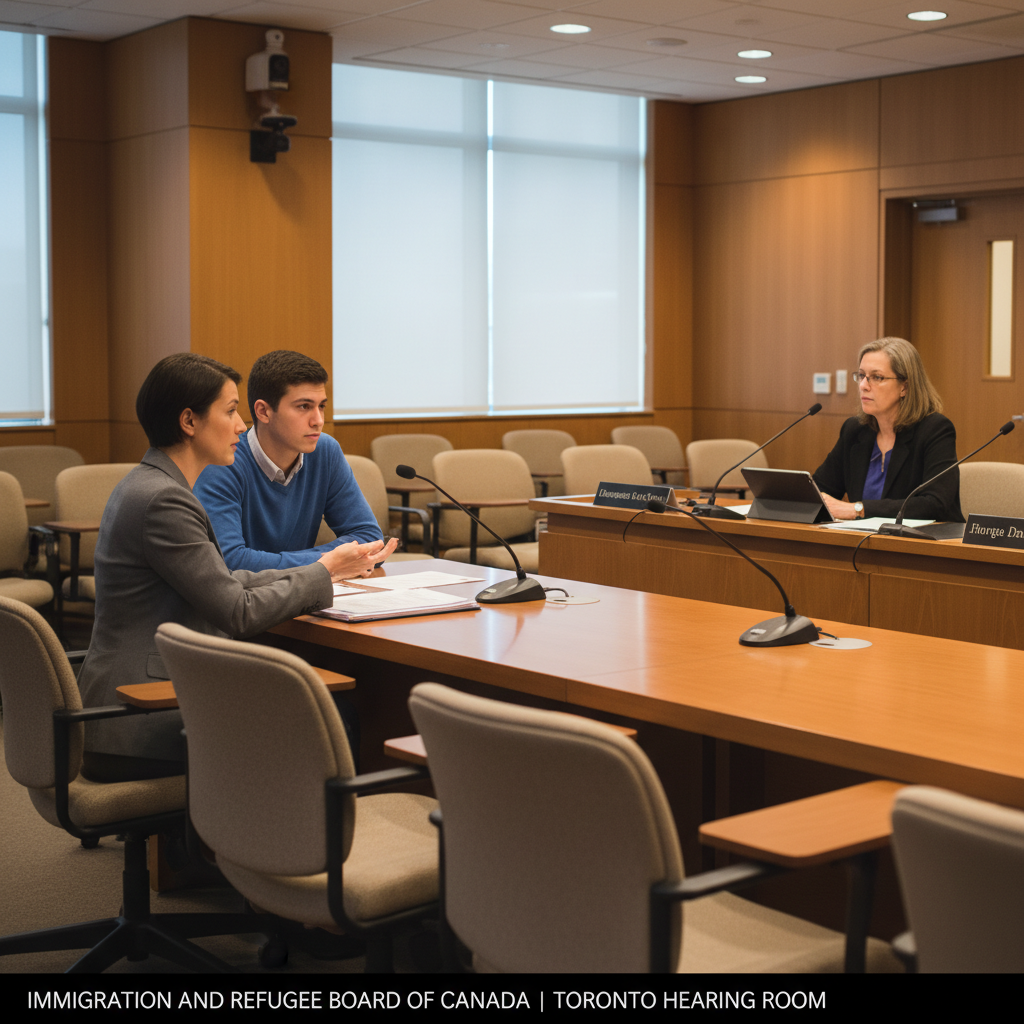
Hearing rooms are structured but not theatrical. Expect microphones, a decision-maker (member or judge), and a focus on facts. Your lawyer will handle legal arguments and help you stay concise. Bring valid ID and arrive early to settle in. If interpretation is needed, advise your lawyer in advance so arrangements can be made.
Accessibility and Communication
We believe clarity reduces stress. You’ll get a simple plan, plain-English explanations, and realistic expectations—no guarantees and no scare tactics. We keep you informed at each step and provide checklists so you always know what’s next.
Free, Fast Triage Call
Unsure which remedy applies? Book a brief triage call to map your deadlines and options. If we can help, we’ll propose clear next steps.
Key Takeaways
- Act within days, not weeks. Deadlines control what’s possible.
- Choose a focused path—appeal, review, PRRA, H&C—based on eligibility and timing.
- Evidence wins cases: organize documents and obtain sworn statements early.
- A deportation immigration lawyer can coordinate stays, filings, and hearing preparation under pressure.
- Local support at 23 Westmore Dr. Unit #218A with virtual options across Ontario.
FAQs
How fast should I contact a lawyer after getting a removal order?
Immediately. Some timelines are only days long, and missing them can close doors. Early triage helps determine whether to pursue a stay, appeal, PRRA, or H&C—and which forum has jurisdiction. Fast action preserves options.
Can I stop removal if I have a Canadian spouse or children?
Possibly. Family ties can support H&C submissions, CBSA deferrals, or sponsorship-linked strategies. The key is targeted evidence—best interests of children, caregiving roles, and the practical impact of removal on your family.
What if I missed an appeal deadline?
You may still have routes like judicial review, PRRA (if eligible), or H&C. Time remains critical—act quickly to protect any remaining options and to assess whether a stay of removal is appropriate.
Will hiring a lawyer guarantee success?
No lawyer can guarantee an outcome. Counsel improves your odds by crafting focused filings, meeting deadlines, and presenting persuasive evidence. Results depend on your facts, records, and legal standards that apply to your case.
Do you offer virtual consultations in Ontario?
Yes. We serve clients across Ontario via secure virtual meetings, with after-hours availability by appointment. In-person meetings are available at 23 Westmore Dr. Unit #218A, Toronto, ON M9V 3Y7.
Ready to talk? Schedule a consultation to review your order, map your defense, and move forward with confidence. We’re located at 23 Westmore Dr. Unit #218A in Toronto and serve the GTA with virtual options across Ontario.