 07 February 2026
If you’re searching for a will preparation guide Ontario families can trust, you’re in the right place. This complete, plain‑English guide explains how Ontario wills work, what to include, and the exact steps to sign and store your documents properly—so your loved ones aren’t left guessing.
Quick Answer
For a valid will in Ontario, put your wishes in writing, sign at the end in front of two independent witnesses, and name an executor (estate trustee). If you’re near 23 Westmore Dr. Unit #218A in Toronto, Vikram Sharma Law drafts and reviews wills and powers of attorney with clear guidance—this will preparation guide Ontario readers can use to get started today.
Overview
- What you’ll learn:
- Ontario’s legal rules for valid wills (Succession Law Reform Act basics)
- What to include: executors, guardians, trusts, digital assets, and a residue clause
- How to sign correctly with two witnesses and avoid common mistakes
- When to add Powers of Attorney (property & personal care) for full protection
- When to DIY—and when to work with a Toronto wills and estates lawyer
- Who this is for:
- Individuals, couples, and families across Toronto, Brampton, Mississauga, Vaughan, and anywhere in Ontario
- Parents of minor children, blended families, new homeowners, and small‑business owners
- Multilingual households that prefer explanations in English, Hindi, or Punjabi
- Why it matters now:
- Life changes fast—marriage, separation, a new home, a new baby, or starting a business all impact your plan
- Clear documents save your family time, stress, and potential disputes
Table of Contents
- What Is a Will? (Ontario Basics)
- Why Will Preparation Matters
- How Will Preparation Works: Step‑by‑Step
- Types of Wills & Planning Approaches
- Best Practices (Updated for 2026)
- Tools, Checklists & Templates
- Toronto & GTA Case Examples
- FAQ
- Conclusion, Key Takeaways & Next Steps
- Related Articles
Quick Summary
- Valid execution: Write your will, sign at the end, and have two independent adults witness (not beneficiaries or their spouses).
- Essentials to include: Executor, guardians, trusts for minors, clear gifts, residue clause, and digital assets notes.
- Keep the original: Ontario probate expects a physical, ink‑signed original; store it safely and tell your executor where it is.
- Round out your plan: Sign Powers of Attorney for Property and for Personal Care alongside your will.
- Update triggers: Marriage or separation, new child, buying/selling a home, business changes, moving in or out of Ontario.
Will Preparation Guide Ontario: What Is a Will?
A will is your legally binding set of instructions for how your estate should be handled after death. In Ontario, the Succession Law Reform Act sets the rules. A proper will helps your executor apply for probate (the court certificate confirming authority) and carry out your plan efficiently.
- Core elements:
- Testator (you): Usually 18+ and mentally capable when signing.
- In writing: Typed or an entirely handwritten holograph will.
- Signature: Your signature at the end confirms your intentions.
- Two witnesses: Independent adults sign in your presence—and you in theirs.
- Executor (estate trustee): The person who applies for probate and administers your estate.
- Smart additions:
- Alternate executor: In case your first choice can’t serve.
- Guardians for minors: State who will care for children under 18.
- Trust terms: Stage distributions (e.g., for education, milestones, age tiers).
- Digital assets: Guidance for email, cloud files, social media, and crypto.
- Funeral preferences: Helpful, even if not strictly binding.
Why Will Preparation Matters
Your will is an act of care. It spares your family guesswork and protects what you’ve built.
- Protects children: Choose guardians and set up trusts for essentials and education.
- Reduces conflict: Clarity and detail lower the risk of disputes.
- Speeds administration: Organized documents help your executor move faster.
- Coordinates assets: Align beneficiary designations (RRSP/TFSA), life insurance, and jointly held property with your plan.
- Supports business continuity: Corporate shares and partnership interests need clear instructions.

Local Tips
- Tip 1: Coming via Highway 427 or Finch Ave W to our Etobicoke office is straightforward; plan an extra 10–15 minutes near Pearson during weekday afternoons.
- Tip 2: If winter weather turns, we’ll review will drafts over secure video and schedule the in‑person signing once roads are clear.
- Tip 3: Prefer Hindi or Punjabi? We provide multilingual explanations so your family is comfortable throughout the signing.
IMPORTANT: These tips reflect how we streamline signings at 23 Westmore Dr. Unit #218A, Toronto.
How Will Preparation Works: Step‑by‑Step
Here’s a proven, low‑stress flow many GTA families follow with our team.
- Gather the basics:
- Government photo ID; full legal name and address.
- Family details: spouse/partner, children (including from prior relationships).
- Asset snapshot: home(s), bank/investment accounts, RRSP/TFSA, life insurance, vehicles, business shares.
- Beneficiaries: people and charities you want to support.
- Executors and backups; guardians for minors.
- Strategy call or meeting:
- Clarify goals (simple will, trust for minors, blended‑family provisions).
- Spot complexity (foreign property, business interests, special needs planning).
- Coordinate with title transfer planning if you’ve just purchased or are refinancing property.
- Drafting your will:
- We translate decisions into clear, enforceable clauses in plain English.
- We avoid ambiguous language—see our guidance on contract drafting best practices for why clarity matters.
- Review and revise:
- Confirm gifts, trustees, and age‑staged distributions.
- Align RRSP/TFSA/insurance beneficiary forms with your will’s plan.
- Signing (execution):
- Sign at the end with two independent adult witnesses present.
- Initial each page; witnesses sign in your presence (and you in theirs).
- Ontario expects a physical, ink‑signed original for probate.
- Store and share:
- Use a fire‑resistant safe or lawyer’s vault; avoid hiding spots family won’t find.
- Tell your executor where the original is; keep a scanned copy for reference.
- Update as life changes:
- Marriage or separation, new child, new home, business sale, moving provinces or countries.
- Use a codicil for minor edits; create a new will for major changes.
Process Snapshot (Quick Table)
| Step | What You Do | Who’s Involved | Typical Outputs |
|---|---|---|---|
| 1. Goals & info | List assets, family, beneficiaries, executors | You, partner | Intake form, asset list |
| 2. Strategy | Discuss guardians, trusts, special assets | You + lawyer | Plan outline |
| 3. Drafting | Review clauses, confirm details | Lawyer | Will draft + summary |
| 4. Signing | Sign with two witnesses | You + witnesses | Executed will (original) |
| 5. Storage | Secure original, share location | You + executor | Original stored, copies noted |
| 6. Updates | Revise after life changes | You + lawyer | Codicil or new will |
DIY vs. Lawyer‑Drafted: Comparison
| Approach | Pros | Cons | Best For |
|---|---|---|---|
| Handwritten (Holograph) Will | Fast; no witnesses required to create | High risk of unclear language; missing clauses; probate delays | Emergencies only; very simple estates |
| DIY Template | Structured; low initial effort | Often misses Ontario‑specific rules; poor fit for blended families or business assets | Simple, low‑risk estates with no minors |
| Lawyer‑Drafted Will | Tailored clauses; proper execution; coordinated plan | Requires scheduling and document gathering | Families with minors, blended families, real estate, or businesses |
Types of Wills & Planning Approaches
Choose the format and strategy that matches your goals and your estate’s complexity.
- Formal (witnessed) will:
- Typed, signed at the end with two independent adult witnesses present.
- Lowest risk of errors; probate‑friendly.
- Holograph (handwritten) will:
- Entirely handwritten and signed by you; can be valid in Ontario.
- Greater risk of ambiguity or missing protective clauses.
- Mirror wills (couples):
- Similar wills that name each other as primary beneficiary.
- Always include backups for children if both parents pass away.
- Will with trusts for minors/special needs:
- Stage distributions (e.g., 21/25/30) and fund education or milestones.
- Consider a Henson trust to preserve disability benefits eligibility.
- Multiple‑jurisdiction planning:
- Own property outside Ontario? You may need an ancillary will in that jurisdiction.
- Coordinate with cross‑border advisors to avoid tax surprises.
Best Practices (Updated for 2026)
- Keep it physical: Courts expect an ink‑signed original for probate.
- Witness wisely: Avoid beneficiary witnesses and their spouses—use independent adults.
- Use a residue clause: Capture everything not specifically gifted to prevent intestacy.
- Coordinate designations: Align RRSP/TFSA and insurance beneficiary forms with your will.
- Plan for the matrimonial home: Understand spousal rights and ownership structure.
- Name alternates: Backups for executor, trustee, and guardians reduce risk.
- Document access: Keep a secure, current asset/password list (not locked away where no one can reach it).
- Update triggers: Marriage, separation, birth/adoption, property purchase/sale, executor changes, big inheritances, starting or selling a business.
- Avoid DIY pitfalls: Generic templates may miss Ontario execution formalities and tax nuances.
- Get support when needed: Our Wills & Estates service offers personalized drafting and coordinated POAs.
Tools, Checklists & Templates
Set yourself up for a clean, fast signing and easier administration later.
- Document checklist:
- Government photo ID
- Asset/beneficiary list (accounts, real estate, insurance)
- Old wills/codicils to revoke
- Contact info for executors/guardians/trustees
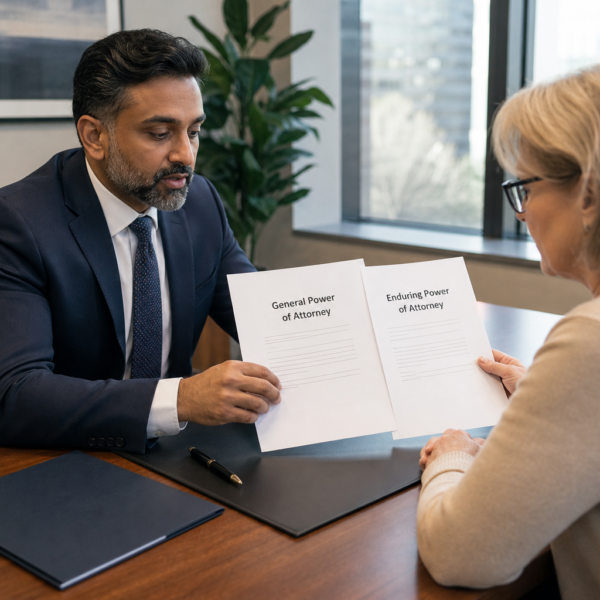
- Powers of Attorney (POA):
- Property: Authorizes a trusted person to handle finances if you’re incapacitated.
- Personal Care: Health and personal decisions if you can’t decide.
- Sign POAs alongside your will for a complete plan—see our simple explainer on how to create a will in Ontario.
- Storage options:
- Fire‑resistant safe at home; give a spare key to a trusted person.
- Lawyer’s vault storage with documented retrieval instructions.
- Executor kit:
- Location of the original will
- Bank and investment contacts
- Insurance details
- Digital account access plan
- Language support:
- We explain documents in English, Hindi, or Punjabi so your family understands every clause.
- Virtual meetings available for relatives outside the GTA.

Toronto & GTA Case Examples
- New parents in Etobicoke: Mirror wills with a trust for their toddler; siblings named as guardians; Powers of Attorney signed in the same appointment.
- Small business owner in Brampton: Will included corporate share provisions and an alternate executor; RRSP and insurance designations were aligned to prevent conflicts.
- Blended family in Mississauga: A spousal trust provided for the surviving spouse while preserving gifts for children from a first marriage; see our divorce agreement checklist for related planning considerations.
- Condo owner in downtown Toronto: Clear residue clause plus a memo for digital assets (email, cloud, crypto) to reduce confusion for the executor.
FAQ
How do I make a will valid in Ontario?
Write your will, sign at the end in front of two independent adult witnesses, and have those witnesses sign in your presence. Don’t use beneficiaries or their spouses as witnesses. Keep the ink‑signed original in a safe place and tell your executor where it is. Typed or handwritten wills can both be valid when the execution rules are followed.
Do I need a lawyer to draft my will?
Not legally, but professional drafting reduces risk. Lawyers anticipate tax issues, beneficiary conflicts, and execution errors that commonly derail probate. If you have minor children, a blended family, real estate in multiple places, a business, or special needs planning, legal help is strongly recommended.
Can I sign my will over video?
Ontario allows remote witnessing under specific conditions, but a physical, signed original is still required for probate. Many families review drafts over video, then complete the in‑person signing with two independent witnesses for certainty.
What happens if I die without a will in Ontario?
Ontario’s intestacy rules decide who inherits and in what shares. Your spouse and children may receive preset amounts; unmarried partners and friends typically don’t inherit at all. A court will appoint an estate trustee, adding delay and stress for your family.
When should I update my will?
Update after marriage or separation, the birth or adoption of a child, a major purchase or sale (like a home or business), moving to or from Ontario, a significant inheritance, or if an executor/guardian can no longer serve. Small changes may be handled with a codicil; major changes call for a new will.
Conclusion, Key Takeaways & Next Steps
- Key Takeaways:
- Ontario wills must be written, properly signed, and witnessed by two independent adults.
- Include executors, guardians, trusts, a residue clause, and coordinated beneficiary designations.
- Store the original safely and update after life changes.
- Action Steps:
- List your assets, beneficiaries, executors, and guardians today.
- Schedule a short strategy call to map your will and Powers of Attorney.
- Sign in one organized session, then store and share the original’s location.
Related Articles
- Choosing the Right Executor in Ontario
- Power of Attorney: Property vs. Personal Care
- Estate Planning for Blended Families
- How Probate Works in Ontario