 01 May 2026
Preparing for property closing is the legal and logistical work you complete before keys change hands. It includes verifying title, funding the mortgage, signing closing documents, and transferring ownership. At 23 Westmore Dr Unit# 218A, Etobicoke, we guide clients on how to prepare for property closing so closing day is smooth, compliant, and on time.
By Vikram Sharma Law Professional Corporation · Last updated: 2026-05-01

Quick Summary
To prepare for property closing, confirm your lender’s final approval, complete the title search, secure home insurance, bring two valid IDs, wire certified funds, and schedule your final walkthrough. Your real estate lawyer coordinates documents, registration, and keys so title transfers correctly and funds are released on time.
This guide shows exactly what to do, when to do it, and why it matters. You’ll learn checklists, timelines, legal documents, and the step-by-step sequence we follow for buyers and sellers across Etobicoke and the Toronto area.
- Actionable, week-by-week closing timeline
- Buyer and seller task checklists
- Document explanations in plain English
- Local tips if you’re completing your closing in Etobicoke
- What to do when issues pop up on closing day
Before You Start (Prerequisites)
Start closing prep by confirming lender conditions, engaging your real estate lawyer, and gathering identification, insurance, and down payment funds. These prerequisites prevent last-minute delays and give your lawyer authority to act, search title, receive instructions, and register ownership on closing day.
In our experience, early organization removes 80% of closing stress. Here’s what to line up first.
Lock in the right team
- Hire your real estate lawyer as soon as the offer is firm so title searches can begin immediately. See our real estate law services for scope.
- Confirm your lender and mortgage product. Lenders typically issue final instructions 3–5 business days before closing.
- Coordinate with your agent and condo/HOA (if applicable) for status certificates, estoppel letters, or move-in bookings.
Gather identification and insurance
- Two pieces of valid ID (one government photo ID). Your lawyer must verify identity under law society and anti–money-laundering rules.
- Property insurance binder effective on closing day; lenders usually require proof 24–48 hours before funding.
Prepare funds and logistics
- Down payment and closing funds in certified form (bank draft or wire). Many banks have afternoon wire cutoffs (often around 3 p.m.).
- Final walkthrough typically 24–72 hours pre-closing to confirm condition and agreed repairs.
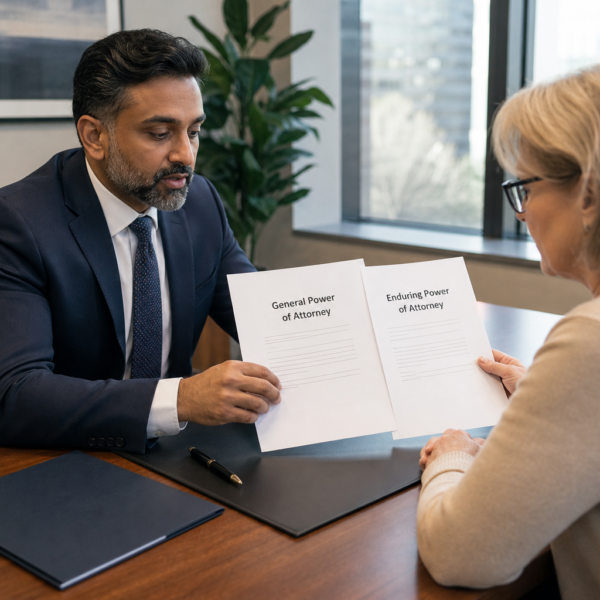
- Power of Attorney (if needed) for a signer who can’t attend; we can draft a limited POA and provide witnessing as part of Wills & Estates services.
Once these are in place, your file is ready to move into formal closing steps without avoidable bottlenecks.
Step-by-Step: How to Prepare for Property Closing
Follow a clear sequence: review the agreement, complete title searches, satisfy lender conditions, sign closing documents, transfer certified funds, register title, and collect keys. Buyers and sellers have different tasks, but timing coordination across all parties is what makes closing day succeed.
1) Review the Agreement of Purchase and Sale (APS)
- Confirm conditions and timelines (financing, inspection, status certificate). Missed dates can void protections.
- Verify inclusions/exclusions and adjustments (appliances, taxes, condo fees). Small mismatches cause big disputes on closing day.
- If selling, assemble mortgage payout details and discharge instructions early.
Example: We often spot ambiguous repair clauses. We’ll draft a simple amendment that clarifies scope and completion date, avoiding last-minute standoffs.
2) Title search and due diligence
- Search title for liens, encumbrances, easements, or condo notices. We use a structured due diligence checklist.
- Order tax and utility statements for accurate adjustments. Expect prorations to the closing date.
- Condo buyers: review the status certificate for reserve funds and special assessments.
Data point: We typically complete core title searches within 3–7 business days, leaving buffer for curing defects where needed.
3) Lender instructions and insurance
- Receive final mortgage instructions from your lender; your lawyer prepares the charge/mortgage for registration.
- Provide insurance binder naming the lender as loss payee (where required).
- Confirm down payment source and any gift letters to meet lender compliance.
Most lenders only fund once they have signed documents, insurance proof, and lawyer undertakings in place—sequencing matters.
4) Signing appointment with your lawyer
- Bring two pieces of ID for identity verification and commissioning of affidavits, if needed.
- Review and sign mortgage, transfer/deed, statutory declarations, and undertakings. We provide a mortgage closing checklist to keep it simple.
- Arrange delivery of certified funds (bank draft or wire) for the balance due on closing.
Signature appointments are usually 2–4 days before closing to allow time for lender funding and registration sequencing.
5) Final walkthrough and utilities
- Walkthrough 24–72 hours prior; confirm repairs, inclusions, and broom-swept condition.
- Utilities: set up accounts and change of address. Sellers should cancel effective on possession transfer.
Tip: Photograph meter readings at move-out/move-in to reduce billing disputes.
6) Closing day sequence
- Funds received and certified: lender advances, buyer’s funds arrive in trust.
- Registration: we register the transfer and mortgage; title changes to your name.
- Keys released once registration confirms and undertakings are satisfied.
Wire cutoffs and registration queue times can vary by day; we build buffer so you’re not waiting after hours for keys.
Buyer vs. seller responsibilities at a glance
| Stage | Buyer Tasks | Seller Tasks |
|---|---|---|
| Pre-closing | Finalize mortgage; provide insurance; deliver down payment | Provide discharge statement; fix agreed repairs; deliver keys/FOBs |
| Signing | Sign mortgage, transfer, declarations | Sign transfer, seller affidavits, payout directions |
| Closing day | Confirm utilities; await registration and key release | Vacate property; confirm final readings and handover |
For a deeper dive into timing, see our guide on real estate due diligence and our page on when to involve a lawyer.
Local Steps in Etobicoke and Toronto
In Etobicoke and the Toronto metro, plan for condo status certificates, building move-in bookings, and bank wire cutoffs that affect key release times. Our office near Martin Grove helps you sign early, coordinate funding, and handle registration so keys are released the same day.
Local context can speed or slow your closing. Small planning moves avoid big day-of delays.
Local considerations for Etobicoke
- Schedule your signing to beat afternoon wire cutoffs; if you’re nearby, our office is minutes from Martin Grove Mall for easy errands on signing day.
- Condo move-in slots book fast in peak months; reserve early so your elevator time aligns with closing.
- New-to-Toronto buyers: bring original IDs; Toronto buildings often require concierge registration before key fob activation.
If you need a limited Power of Attorney or a notarized statutory declaration, our Notary Public team can prepare, witness, and commission documents on-site before your closing day.
Troubleshooting: Common Closing Day Issues
Most closing issues are solvable with clear undertakings and documentation. When funding, registration, or condition disputes arise, your lawyer can hold back funds, draft amendments, or register later the same day once cures are delivered.
Delayed lender funding
- What happens: wires miss cutoff or lenders need last-minute documents.
- Fix: we provide undertakings, resend insurance, and prioritize document queues; keys release after registration confirms.
- Prevention: sign 2–4 days early; send insurance 48 hours in advance.
Walkthrough surprises
- What happens: cleanliness issues or missing inclusions.
- Fix: agree to a reasonable holdback or a written contractor remedy with completion proof.
- Prevention: walkthrough within 24 hours and photos of agreed repairs.
Title defects or condo assessments
- What happens: undisclosed liens or upcoming assessments.
- Fix: vendor to discharge or credit adjustments; for condos, prorate pending assessments where appropriate.
- Prevention: early status certificate review and complete title search window (3–7 business days).
We document all resolutions in writing so the registration record is clean and future resale is straightforward.
Advanced Tips (Optional)
To optimize your closing, pre-clear compliance items, use limited Powers of Attorney for travel conflicts, and align move logistics with funding windows. Buyers and sellers who prep two weeks in advance have the smoothest closings.
- Independent Legal Advice (ILA): if a non-owner spouse guarantees a mortgage or signs a separation agreement, obtain ILA to safeguard enforceability.
- Corporate buyers/sellers: prepare minute books, resolutions, and signing authority early; see our transaction steps guide.
- Estate sellers: confirm probate or authority documents with our Wills & Estates team before listing.
- Title insurance: maintain coverage; it can address certain defects discovered after closing.
- Separation agreements: if family law intersects with your sale/purchase, our firm drafts and finalizes separation agreements efficiently.
Planning 10–14 days ahead allows for lender reviews, strata approvals, condo booking, and document commissioning without rush.
Need help coordinating your closing?
If you want a lawyer-managed closing with clear timelines and zero surprises, our Etobicoke team coordinates title, lender funding, registration, and keys. We keep you updated at each milestone and resolve issues before they become problems.
Soft CTA: Have a firm deal? Book a brief consultation so we can open your file, request instructions, and start searches right away.
Frequently Asked Questions
Here are concise answers to the most common closing questions buyers and sellers ask us. Each response is designed for quick scanning and voice results, and it reflects how we actually run closings in Etobicoke and the Toronto area.
What should I bring to my signing appointment?
Bring two valid IDs (one government photo ID), proof of home insurance effective on closing day, your mortgage commitment, and any documents your lender or lawyer requested. If you’re delivering funds by draft, bring the bank draft payable as instructed.
When do I get my keys on closing day?
Keys typically release after funds are received, documents are registered, and confirmations are exchanged between lawyers. This often occurs mid to late afternoon, depending on wire cutoffs and land registry processing times.
Do I need title insurance?
Title insurance is recommended because it can protect against certain losses related to title defects, fraud, survey issues, and registration errors. Many lenders require it as a funding condition, and it’s a practical risk-management tool for buyers.
Can someone else sign for me?
Yes, with a properly drafted limited Power of Attorney that authorizes a trusted person to sign closing documents. We prepare and notarize limited POAs, but lenders must approve the arrangement in advance, so tell us early if you need this.
Additional Resources
Use trusted sources to understand closing requirements and timelines. Government and housing guidance can clarify steps and definitions while your lawyer applies them to your specific deal.
Key Takeaways
Close smoothly by preparing early, sequencing lender funding with registration, and using your lawyer to solve surprises with clear undertakings. A two-week head start and a same-day signing window keep keys on schedule.
- Start with prerequisites: ID, insurance, funds, and lender conditions.
- Sequence: title search → signing → funding → registration → keys.
- Plan around wire cutoffs and building bookings in Toronto.
- Use independent legal advice when family or corporate factors overlap.
- Give yourself 10–14 days of runway before closing day.
Conclusion
The fastest way to a low-stress closing is a lawyer-led plan that begins two weeks early and anticipates funding, registration, and key release timing. With the right documents and sequencing, closing day becomes a simple handoff—not a scramble.
We help buyers and sellers across Etobicoke and Toronto complete title transfers, mortgage closings, and related notary work in one coordinated process. If you’re ready to open a file, our team will align your timeline, confirm documents, and manage every moving part.
Final CTA: Book a brief discovery session at our Etobicoke office to kick-start searches and instructions. We’ll map your dates, handle paperwork, and get you to keys—on time.
Downloadable Checklists
Use these condensed prep lists to track your progress. They reflect how we run files daily, adapted for first-time and seasoned clients.
- Buyer’s prep: IDs, insurance binder, lender conditions, down payment draft/wire, walkthrough photos, utility setup.
- Seller’s prep: mortgage payout statement, discharge authority, repair proofs, keys/FOBs/garage remotes, utility cancellations.
- Optional: limited Power of Attorney, notarized statutory declarations, certified true copies for lender files.