
 01 June 2026
An immigration law lawyer is a licensed advocate who guides you through visas, permanent residence, sponsorships, and citizenship with strategy and strict compliance. From our Etobicoke office at 23 Westmore Dr Unit# 218A, we help Toronto families and employers complete applications on time, fix issues early, and respond effectively to officers.
By Vikram Sharma — Barrister, Solicitor & Notary Public
Last updated: 2026-06-01

At a Glance
This 2026 guide explains how immigration works, when to hire a lawyer, and what to submit for stronger approvals. You’ll get clear steps, checklists, examples, and local tips for Etobicoke and the Toronto metro so you can plan confidently and avoid common mistakes that trigger delays or refusals.
- What an immigration law lawyer actually does and why it matters
- Toronto-area considerations that affect timing, travel, and school/work starts
- Exact steps: eligibility mapping, evidence building, submission, and follow-up
- Programs: study/work permits, Express Entry, family sponsorship, citizenship
- Best practices that raise approval odds and reduce back-and-forth
- Practical tools, official resources, and mini case studies you can model
Start Here: Your 2026 Immigration Law Lawyer Guide
Start by matching your goal to the right pathway and building evidence that proves each requirement. Organize IDs, work history, funds, and timelines before you touch forms. A lawyer streamlines choices, closes gaps fast, and protects your rights if a refusal requires legal challenge.
Here’s how we approach new files at our Etobicoke office serving the Toronto metro:
- Clarify your goal: Study, work, reunite with family, or settle permanently.
- Choose the pathway: We compare options and risks before any forms.
- Plan the evidence: One document and one explanation for every rule.
- Control the timeline: Buffer for biometrics, medicals, and official requests.
- Escalate wisely: If refused, we assess reconsideration or judicial review.
For detailed service information, see our immigration law services page, which outlines common applications and how we collaborate with students, workers, families, and employers.
What Is an Immigration Law Lawyer?
An immigration law lawyer advises on eligibility, prepares forms and evidence, resolves legal issues like refusals or inadmissibility, and represents clients before decision-makers. We blend legal analysis with document precision to maximize approval odds and safeguard your rights if the process becomes adversarial.
In practice, that means we:
- Diagnose eligibility: We confirm criteria and spot red flags early (gaps, prior refusals, status concerns).
- Engineer the evidence: We map each rule to concrete proof and concise explanations.
- Audit the forms: We align dates, jobs, addresses, and travel across every field.
- Prepare legal submissions: We write targeted letters when nuance or discretion matters.
- Coordinate post-filing: We track requests and deadlines and respond without delay.
- Pursue remedies: When appropriate, we seek reconsideration or judicial review.
For permanent residence background and requirements, our guide to permanent residency requirements dives deeper into eligibility and evidence standards.
Why Immigration Law Matters in Etobicoke and Toronto
In a large metro like Toronto, immigration drives hiring, education, and family reunification. Local school intakes, employer timelines, and travel peaks create real-world pressures. Skilled counsel aligns your evidence and timing so your submission is credible, coherent, and on schedule.
We routinely help clients coordinate school start dates, work transfers, and family reunions across Etobicoke and the wider Toronto metro. When a file must land before a semester or role start, timeline discipline matters as much as eligibility. A clean, consistent record reduces clarifications, which can save weeks.
Local considerations for Etobicoke
- Meet near familiar points like Humber Centre for Trades & Technology to gather documents and signatures efficiently.
- Expect academic surges; start study-permit files well ahead of intake windows to avoid last-minute stress.
- Living or working near Martin Grove Mall? Batch notarizations and errands in one trip to maintain momentum.
When applications involve sponsorships, see our checklist of sponsorship requirements for what officers expect to see—and what commonly goes missing.
How Immigration Law Works (Step-by-Step)
Most applications move through four phases: eligibility screening, evidence assembly, submission (with biometrics/medicals), and post‑filing responses. Complex files add legal briefs or court remedies. Precision and speed at each phase lower risk and support favorable outcomes.
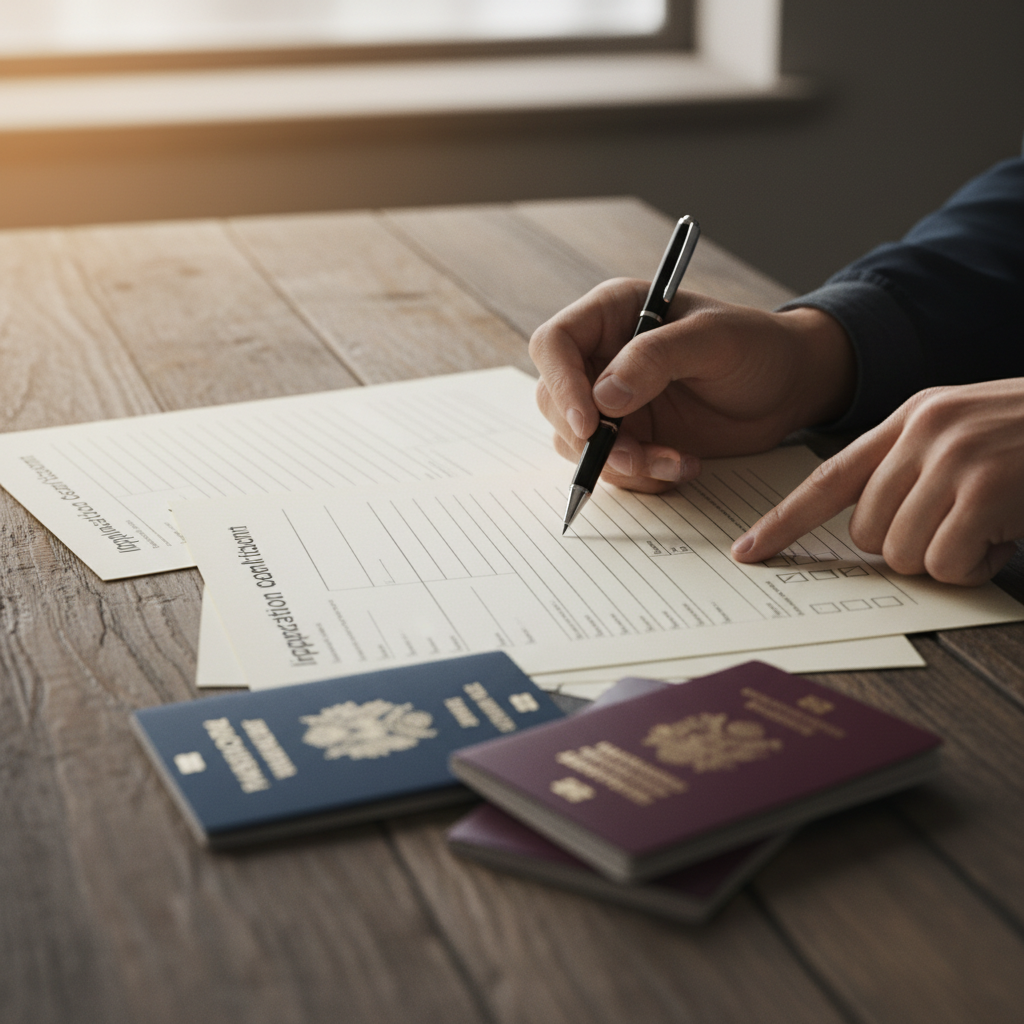
For a walkthrough of permanent residence logistics, see our permanent residency application process guide with timelines, biometrics/medical checkpoints, and post‑AOR monitoring tips.
Types of Immigration Pathways We Handle
We assist with study permits, work permits, Express Entry (PR), family sponsorships, citizenship, and judicial review. Each pathway carries unique eligibility and documents. Choosing the right track—and proving every rule with credible evidence—is central to success.
Education and work pathways
- Study permits: Admissions letter, proof of funds, and a clear study plan that links to career goals.
- Work permits: Employer letters, LMIA or exemption codes, and role duties aligned to NOC descriptions.
Permanent residence and family
- Express Entry (PR): Language scores, ECAs, and verifiable work history drive ranking.
- Family sponsorship: Relationship evidence must be consistent, detailed, and ongoing.
Citizenship and remedies
- Citizenship: Residency days, tax filings, and test/interview readiness determine outcomes.
- Judicial review: A legal remedy when a refusal appears unreasonable or procedurally unfair.
| Pathway | Best fit | Key proof |
|---|---|---|
| Study Permit | Prospective students | LOA, funds, study plan |
| Work Permit | New hires/transfers | Offer, LMIA/exemption, duties |
| Express Entry (PR) | Skilled workers | Language, ECA, experience |
| Family Sponsorship | Spouses/Dependents | Genuine relationship, cohabitation |
| Citizenship | PRs seeking status | Residency, taxes, test readiness |
| Judicial Review | Refused applicants | Decision record, legal grounds |
For sponsorship logistics and pitfalls to avoid, use our step map in the PR sponsorship process guide. If your matter involves permits, our overview of immigration permit types clarifies choices and typical supporting proof.
Best Practices to Improve Approval Odds
Approvals follow consistent, evidence‑driven files. Map every rule to specific proof, explain gaps with short factual letters, and eliminate contradictions across forms. Small inconsistencies often trigger big delays—tight version control and date checks prevent them.
Build a requirement matrix
- One rule, one proof: Tie each requirement to at least one document.
- One explanation: Where needed, add a brief, factual letter giving context.
- References: Use headings and filenames so officers can locate items instantly.
Control versions and dates
- Master set: Keep a single source of truth for forms and IDs.
- Date alignment: Match employment, travel, and address ranges everywhere.
- Expiry checks: Watch passports, permits, and tests months in advance.
Preempt officer questions
- Gaps: Explain study or work gaps with objective evidence (contracts, payroll, letters).
- Purpose: Connect studies or roles to your past and future with a simple narrative.
- Consistency: Avoid exaggerated claims; concise facts are more credible.
When you need sworn statements to support timelines or relationships, our affidavits and statutory declarations service helps formalize facts officers can rely on.
Tools and Resources for Applicants

Case Studies and Real Examples
Results improve when files are organized, narratives are coherent, and responses are fast. These short scenarios show how targeted strategy and disciplined documents turn risk into approval—even with gaps or past refusals.
Study permit with a two‑year gap
- Issue: A two‑year study gap raised purpose‑of‑visit concerns.
- Action: We compiled payroll records, supervisor letters, and a study plan linking the program to career goals.
- Outcome: Clear alignment between past experience and program choice supported approval.
LMIA‑exempt intra‑company transfer
- Issue: Duties didn’t clearly match NOC requirements for the transfer.
- Action: We aligned role descriptions to accepted NOC language and clarified the exemption category.
- Outcome: A coherent employer letter, aligned duties, and corporate documents strengthened the case.
Spousal sponsorship with limited joint proof
- Issue: Few joint accounts or leases due to frequent relocations.
- Action: We built a timeline with photos, travel history, chats, and affidavits confirming cohabitation.
- Outcome: A consistent, chronological narrative demonstrated a genuine, ongoing relationship.
If you’ve received a refusal, read our judicial review application guide and our primer on the judicial review process for timelines and decision‑record essentials.
Immigration Law Lawyer vs. Consultant vs. DIY
DIY can work for simple, low‑risk files when you have time to research. Consultants assist with forms and document organization. A licensed lawyer adds legal submissions, rights advocacy, and court remedies like judicial review when fairness or reasonableness is disputed.
| Option | Best for | Risks | When to upgrade |
|---|---|---|---|
| DIY | Straightforward files | Hidden inconsistencies | Past refusals, complex histories |
| Consultant | Form + checklist help | Limited legal recourse | Inadmissibility, litigation risk |
| Lawyer | Strategy + advocacy | Requires collaboration | Employer cases, refusals, court remedies |
When questions cross into legal interpretation or when timelines are tight, partnering early with a lawyer prevents missteps that become costly to unwind later.
Frequently Asked Questions
These Q&As cover timing, documents, refusals, and when to involve a lawyer. Use them to avoid predictable mistakes and plan your next steps with confidence.
When should I hire an immigration law lawyer?
Engage counsel if you have prior refusals, inadmissibility issues, complex work/travel histories, or tight start dates. A lawyer also helps when legal submissions, reconsideration, or judicial review may be necessary to protect your rights.
What documents matter most?
Documents that directly prove each rule: identity, status, funds, language scores, education, employment, and relationship evidence. Consistency across dates, addresses, and titles is as critical as the documents themselves.
Can I challenge a refusal?
Some refusals can be challenged by judicial review if the decision was unreasonable or procedurally unfair. Options and timelines depend on the program and the reasons in your refusal letter and record.
What raises approval odds?
A coherent, consistent, and well‑evidenced file. Map each requirement to specific documents, address gaps with short factual letters, use accepted language/credential providers, and respond to officer requests promptly.
Key Takeaways and Next Steps
Choose the correct pathway, assemble airtight evidence, and keep strict timelines. For complex histories or urgent starts, a lawyer reduces risk and preserves legal options if a refusal needs to be challenged quickly.
- Summarize your case: Goals, deadlines, travel/work/study history, and potential gaps.
- Assemble proof: IDs, funds, employer/student letters, and relationship evidence in one folder.
- Audit forms: Check dates and addresses match across every page before submission.
- Plan buffers: Book biometrics and medicals early; track portals for requests.
- Get counsel: If stakes are high, schedule a focused consult to pressure‑test your file.
Soft CTA: If you’re ready for a clear, local plan, book a consultation in Etobicoke. We’ll map your pathway, evidence, and timeline in one working session.