
 07 March 2026
In the realm of legal documentation, the terms ‘affidavit’ and ‘statutory declaration’ often arise, leading to confusion for many. These are crucial instruments in various legal situations, but they serve different purposes and requirements. At Vikram Sharma Law Professional Corporation, understanding these differences and leveraging them effectively is part of the comprehensive legal services we offer.
What is an Affidavit?
An affidavit is a written statement confirmed by oath or affirmation, used as evidence in court. It’s crucial in scenarios where factual information needs to be presented officially. For instance, in real estate transactions, affidavits are often required to verify the authenticity of documents or declarations made by parties involved.
Common Uses of Affidavits
- Property Transactions: Used to confirm facts about a property or ownership.
- Family Law: Necessary for declarations in matters like divorce or custody.
- Business Agreements: Affidavits might be needed to affirm the terms agreed upon.
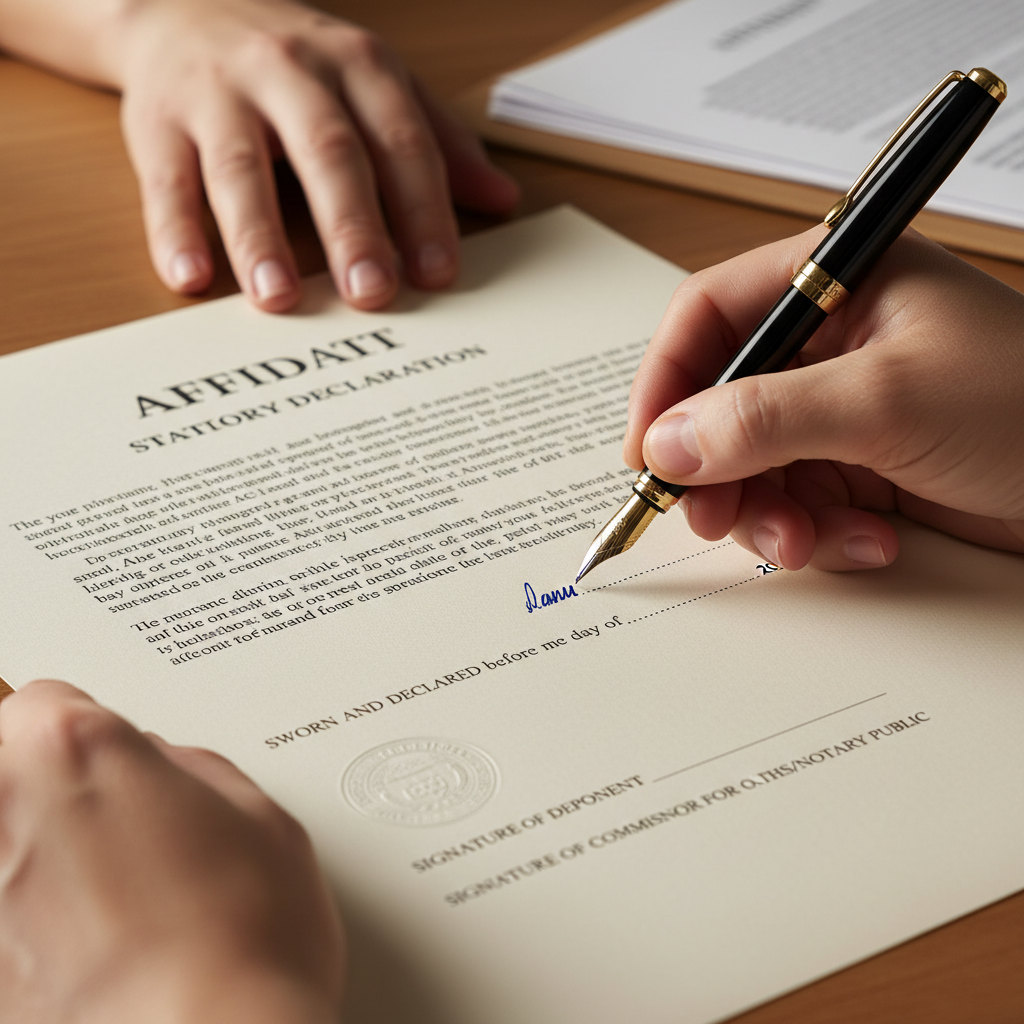
What is a Statutory Declaration?
A statutory declaration is similar to an affidavit but is used for non-court purposes. It’s a legal document that allows a person to declare something to be true before a legal figure such as a notary public, often used in business and immigration matters.
Common Uses of Statutory Declarations
- Immigration Processes: Declaring residency status or intent.
- Business Incorporation: Verifying compliance with statutory requirements.
- Document Certification: Confirming the originality or authenticity of documents.

Key Differences Between Affidavits and Statutory Declarations
While both documents are used to declare truth, the key difference lies in their application and the legal context under which they are used. At Vikram Sharma Law, we ensure each document is correctly drafted to meet its specific legal requirements.
- Legal Context: Affidavits are primarily for court proceedings, whereas statutory declarations are for legal affirmations outside of court.
- Usage: Affidavits require an oath, while statutory declarations are acknowledged by a legal figure without court involvement.
Why Choose Vikram Sharma Law for Your Legal Documentation?
Choosing the right legal representation is crucial for ensuring your documents are valid, precise, and compliant. Vikram Sharma Law provides expert guidance and document preparation services that align with legal standards and personal needs.
Our Services Include:
- Document Preparation: Ensuring all paperwork meets legal standards.
- Legal Consultation: Providing detailed explanations and solutions.
- Notary Services: Official notarization of documents to affirm authenticity.
Best Practices for Legal Documentation
To ensure your legal documents are effective and recognized, follow these best practices:
- Verify all details for accuracy before submission.
- Consult with legal professionals like those at Vikram Sharma Law to understand your obligations and rights.
- Keep a comprehensive record of all legal documents for future reference.
Case Studies/Examples
Case Study 1: A real estate client needed an affidavit to confirm the details of a property sale. With our help, the transaction was smooth and legally sound.
Case Study 2: For a business incorporation, a statutory declaration was necessary to verify compliance with incorporation laws, which we facilitated efficiently.
Frequently Asked Questions (FAQ)
- What is the main difference between an affidavit and a statutory declaration? Affidavits are sworn for court use, while statutory declarations are used for out-of-court legal affirmations.
- Who can witness these documents? A notary public or legal professional can witness affidavits and statutory declarations.
- Are affidavits necessary for all legal proceedings? While not always required, they are often used when factual statements are essential.
Conclusion
Understanding the differences between affidavits and statutory declarations is essential for proper legal documentation. At Vikram Sharma Law, we are committed to providing expert guidance and support in all your legal documentation needs. Contact us today to ensure your documents are prepared accurately and effectively.