 26 January 2026
Canadian Citizenship Application Process: How to Become a Citizen
Getting from permanent resident to passport can feel daunting. Here’s the thing: the Canadian citizenship application process is straightforward once you know the exact steps, documents, and timelines. This complete, Toronto-focused guide from Vikram Sharma Law Professional Corporation walks you through every stage, so you can prepare with confidence and avoid delays.
Overview
- Who this is for: Permanent residents in the Greater Toronto Area preparing to apply for Canadian citizenship.
- What you’ll get: A step-by-step roadmap, document checklists, test prep tips, and legal guidance tailored to Toronto applicants.
- Why trust this guide: Vikram Sharma Law Professional Corporation (23 Westmore Dr. Unit #218A, Toronto) serves GTA communities with immigration law, notary public services, affidavits, and judicial review support.
- Primary focus: Eligibility, physical presence calculation, language and knowledge requirements, documentation, submission, tracking, test/interview, oath, and post-ceremony steps.
Quick Answer
The Canadian citizenship application process requires proving eligibility (especially physical presence and language), submitting a complete application, passing the knowledge test/interview, and taking the Oath. If you’re in Toronto near 23 Westmore Dr. Unit #218A, our immigration team at Vikram Sharma Law Professional Corporation can prepare your file and resolve document gaps end-to-end.
Local Tips
- Tip 1: If you’re traveling to our office by car, plan around Highway 27 and Finch Ave W traffic windows. Parking is typically easier mid-morning near 23 Westmore Dr.
- Tip 2: Winter appointments? Bring originals in protective sleeves—snow and slush can damage photos and paper. We can notarize certified true copies so originals stay safe.
- Tip 3: South Asian language support matters. Our team serves English, Hindi, and Punjabi speakers, which helps with translating names, dates, and educational records accurately.
IMPORTANT: These tips reflect Toronto-specific realities and the firm’s multilingual immigration and notary services.
What Is the Canadian Citizenship Application Process?
The pathway to citizenship is a legal process to confirm you meet eligibility criteria and understand Canada’s rights and responsibilities. It culminates with the Oath of Citizenship and a citizenship certificate.
- Core elements: Eligibility, application package, biometrics (if requested), test and interview, decision, and oath ceremony.
- Eligibility pillars:
- Permanent resident status (not under review for immigration fraud or removal)
- Physical presence in Canada for a requisite number of days within the qualifying period
- Language ability (English or French) for applicants within the required age range
- Knowledge of Canada (citizenship test) for applicable age groups
- Tax filings met for required years, if applicable
- No prohibitions (certain criminal/offense histories within defined windows)
- End result: A citizenship certificate and, soon after, the ability to apply for a Canadian passport.
Why Becoming a Citizen Matters
Beyond the sense of belonging, citizenship unlocks civic, travel, and security benefits.
- Stability and rights: Vote, hold a Canadian passport, and access full protections as a citizen.
- Mobility and travel: Streamlined reentry to Canada and broader visa-free or visa-on-arrival access.
- Family and future: Simplified future sponsorship pathways and a stronger foundation for your children.
- Practical benefits: Less reliance on maintaining PR status or residency compliance after citizenship.
- Community roots: For many GTA families, citizenship is the capstone to years of work, school, and community ties.
How the Canadian Citizenship Application Process Works (Step-by-Step)
Use this step-by-step framework to plan, prepare, and submit a strong application.
Step 1: Confirm Eligibility
- Permanent resident status: Ensure your PR status is valid and not in question.
- Physical presence: Calculate qualifying days in Canada during the relevant period.
- Include partial credit for pre-PR time if eligible (as permitted by current rules).
- Exclude days outside Canada beyond allowable limits.
- Age-based requirements: Know if you must submit language proof and take the test.
- Taxes: Verify tax filings for required years have been submitted.
- Prohibitions: Screen for any recent offenses that may pause eligibility.
Step 2: Gather Documents
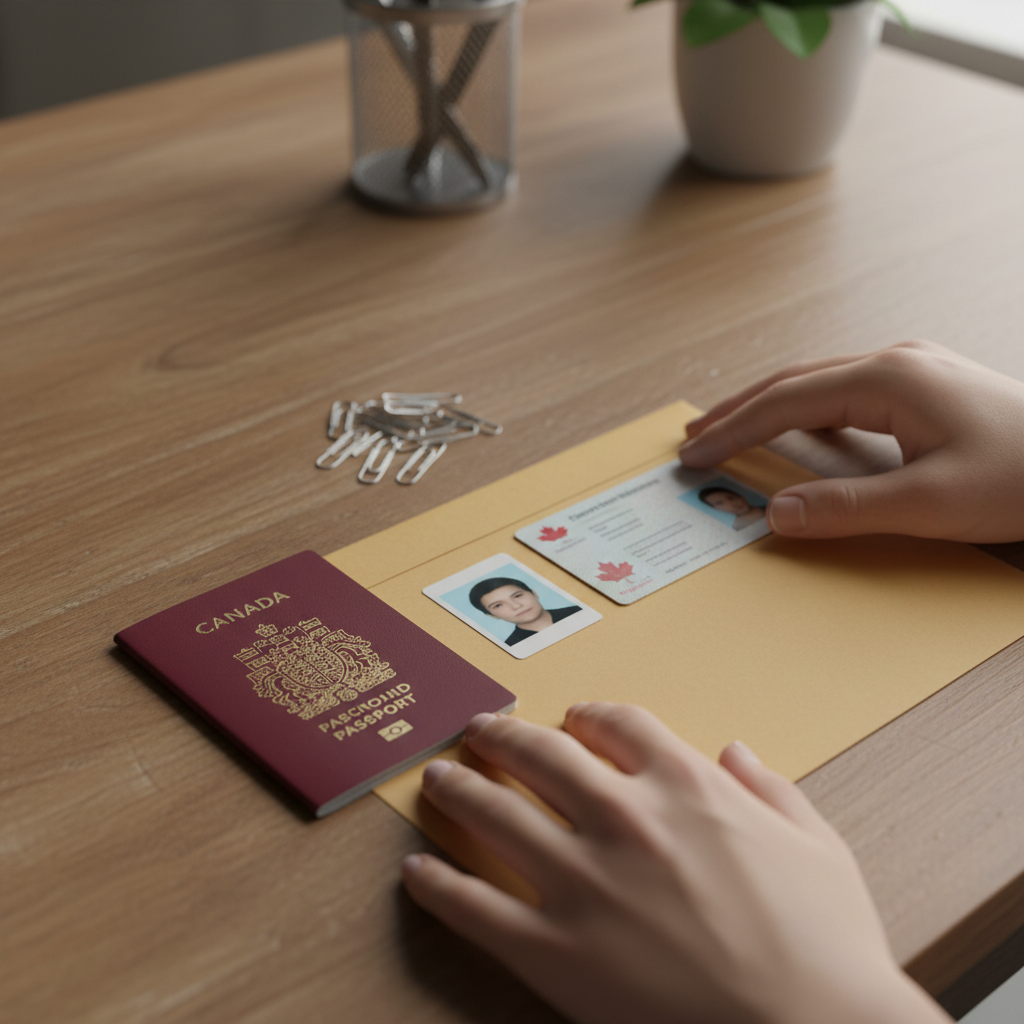
- Identity and status: PR card (even if expired but PR valid), immigration documents, and government-issued ID.
- Travel history: Passports covering the qualifying period plus any temporary travel docs.
- Language proof (if required): Recognized test results, transcripts, or certificates.
- Photos: Citizenship-style photos that meet current specifications.
- Name changes: Legal proof of name change (if applicable).
- Children’s records: Birth certificates, custody documents, and school records where needed.
- Translation and certification: Certified translations and notarized copies as necessary. Our team provides notary public services on-site to help you meet document standards.
Step 3: Complete the Application Package
- Choose the right form: Adult (18+), minor (under 18), adopted child, or special cases.
- Fill forms carefully: Match passport stamps, travel dates, and addresses—small inconsistencies trigger delays.
- Prepare explanations: Where dates or documents are missing, include a clear, signed explanation. Our affidavit services can formalize statements when evidence is limited.
- Photographs: Ensure exact size and background specs; label per current instructions.
- Language proof & school records: Include certified translations if not in English or French.
Step 4: Pay and Submit
- Submission method: Some streams accept online submission; others require mail to the correct intake office.
- Mailing: Use a trackable courier and flat, protective packaging so photos don’t crease.
- Copy set: Keep a complete copy set (digital and paper) with your tracking number.
Step 5: Watch for Acknowledgment of Receipt (AOR)
- AOR notice: Confirms intake and creates your file number; check junk/spam folders.
- Account linkage: Link your file to an online account when possible to view status updates.
Step 6: Respond to Any Requests
- Additional documents: If IRCC requests fingerprints, police certificates, or clarifications, respond by the stated deadline.
- Fingerprints: Book an accredited fingerprinting service promptly; keep the receipt for your records.
- Address changes: Update your address immediately to avoid lost letters and rescheduling.
Step 7: Take the Citizenship Test and Complete the Interview
- Study scope: Canadian history, institutions, rights/responsibilities, symbols, and geography.
- Format: Test plus a brief interview to verify identity, language ability (if required), and application details.
- Prep tips:
- Schedule dedicated study blocks 2–3 weeks before your test.
- Use practice questions; teach concepts aloud to someone else to reinforce memory.
- Arrive early with original IDs and copies of key documents.
Step 8: Receive the Decision
- Approval path: You’ll receive an invitation to the Oath of Citizenship ceremony.
- If concerns arise: Address issues promptly; our team can help prepare supplemental evidence or sworn statements.
Step 9: Attend the Oath Ceremony
- What to bring: IDs, ceremony notice, and any required documents.
- What happens: Oath, certificate issuance, and celebratory photos.
- Tip for families: Plan for childcare and transportation so everyone can be on time.
Step 10: After the Oath
- Apply for a passport: Use your citizenship certificate as proof of citizenship.
- Secure your records: Store your certificate safely; consider certified true copies for non-travel uses.
- Update key agencies: Where appropriate, update citizenship status with employers or schools.
Who Can Apply: Applicant Types and Special Situations
Different applicant types face slightly different documentation or proof requirements. Here’s a quick comparison.
| Applicant Category | Key Requirements | Common Proofs | Watch Outs |
|---|---|---|---|
| Adults (18+) | Physical presence, tax filings (if applicable), language proof, knowledge test | Passports/travel history, PR docs, test results, transcripts | Unreported travel gaps; mismatched addresses; missing translations |
| Minors (under 18) | Linked to a parent’s status or submitted with a parent | Birth certificate, custody evidence if applicable | Proof of parent’s status; consent forms; school records clarity |
| Adopted Children | Adoption finalized and recognized; proper documentation trail | Adoption orders, home country documents, translations | Missing legalization/apostille; gaps in timeline |
| Spouses/Partners Counting Time | Credit for time in Canada when accompanying a Canadian spouse (as rules permit) | Marriage certificate, joint leases, travel records | Insufficient proof of cohabitation or joint residence |
| Crown Servants/Family Members | Special provisions for service-related presence | Employment letters, service records | Documentation precision and eligibility interpretation |
| Stateless or Complex Histories | Detailed affidavits and alternative evidence | Sworn declarations, alternative IDs, community letters | Inconsistent identity records; missing primary documents |
Unsure where you fit? Our immigration law team will match your facts to the right path and prepare tailored evidence strategies.
Best Practices to Avoid Delays
Small mistakes create long delays. These habits keep files moving.
- Mirror your travel history: Make sure passports, entry/exit stamps, and forms align.
- Track days precisely: Use a day-by-day calendar and keep proof of trips.
- Use certified translations: Translators should include statements of accuracy; we can notarize supporting documents.
- Explain gaps proactively: If documents are missing, attach a clear, signed explanation or a sworn statement.
- Keep a document index: Number sections and create a one-page index referencing tabs.
- Respond fast to requests: Calendar deadlines the same day a notice arrives.
- Bring originals to the interview: Originals, copies, and a highlighter make verification smooth.
- Practice test timing: Simulate timed sessions and review wrong answers first.
- Maintain consistent addresses: Update mailing addresses immediately when you move in the GTA.
Need a second set of eyes? We offer end-to-end reviews, from physical presence checks to affidavit drafting and notarization.
Tools, Worksheets, and Resources
Use these simple aids to keep your application consistent and complete.
Checklists You Can Copy
- Identity & Status Folder: PR card, CoPR/Landing, government ID, name change proof.
- Travel Folder: Current and old passports, travel logs, tickets/itineraries, border records.
- Language Folder: Test results, transcripts, diplomas, letters from schools.
- Tax Folder: CRA notices of assessment (if applicable), employment letters, pay stubs.
- Family Folder: Birth certificates, custody orders, marriage certificates.
- Evidence Folder: Leases, utility bills, school registrations, clinic visits.
Simple Tracking Templates
- Travel Days Log: Columns for departure date, return date, country, reason, proof on file.
- Document Index: Tab number, document name, date, language, translation status.
- IRCC Requests Tracker: Date received, due date, what’s needed, who’s responsible, sent date.

When to Ask for Legal Help
- Complex travel history: Multiple passports, name changes, or long trips abroad.
- Criminal or enforcement history: Determining if a prohibition period applies.
- Adoption/guardianship issues: International documents requiring legalization or translations.
- Document shortages: When affidavits or alternative proofs are needed.
- Language/test challenges: Disability accommodations or unique learning needs.
For tailored guidance, book a GTA-focused consultation with our immigration lawyers in Toronto.
Realistic Examples and Mini Case Insights
These short, anonymized scenarios reflect frequent patterns our GTA clients face. Use them to anticipate documentation needs.
- Example 1: PR with multiple short trips — We reconciled 14 weekend trips using airline emails and border stamps to confirm presence.
- Example 2: Name change after marriage — We added a notarized certified true copy of the marriage certificate to align passport and PR records.
- Example 3: Lost old passport — A sworn declaration explained the loss; we included travel logs and employer letters to bridge evidence.
- Example 4: Parent applying with minor — We attached school letters and a custody order; timelines were matched to the parent’s presence.
- Example 5: Gaps in addresses — Utility bills and lease addendums helped fix a two-month gap during a move from Mississauga to Toronto.
- Example 6: Language proof confusion — Post-secondary transcripts sufficed; no separate test needed for that applicant.
- Example 7: Long absence abroad — We calculated presence carefully and delayed filing three months to cross the threshold.
- Example 8: Translations — We used certified translators and notarized the translator’s affidavit to confirm accuracy.
- Example 9: Adoption file — Added country-of-origin adoption orders plus Canadian recognition documents with proper translations.
- Example 10: Fingerprint request — Pre-booked at an accredited lab; results matched quickly with the IRCC file number.
- Example 11: Test nerves — Two weeks of short, daily practice sessions improved timing and accuracy.
- Example 12: Minor discrepancies — We flagged a one-day date mismatch in a cover letter, avoiding a later document request.
- Example 13: Ceremony reschedule — We submitted a clear, respectful request with proofs of a medical appointment; the new date arrived promptly.
Frequently Asked Questions
How do I calculate my physical presence days correctly?
Count each full day you were physically in Canada during the qualifying period, subtracting days you were outside Canada. Some pre-PR time may count as partial credit under current rules. Keep a dated travel log and align it with passport stamps, boarding passes, or itineraries. When dates are unclear, attach an explanation or consider a sworn declaration to clarify.
What language proof is acceptable?
Acceptable proof typically includes results from recognized tests or academic transcripts/diplomas taught in English or French. If your documents are in another language, add a certified translation. Confirm the issuing institution details are legible and include your full legal name to avoid mismatch issues at the interview.
What should I bring to the test and interview?
Bring the original IDs you used in your application, your PR card, all passports covering the qualifying period, and your test/interview notice. Also carry photocopies of key pages and a list of trips. Arrive early to account for security and check-in. Keep your phone silenced and documents organized in a folder with tabs.
Can I apply for my child’s citizenship at the same time?
Yes, minors often apply with a parent or based on a parent’s status. Include the child’s birth certificate, custody orders if applicable, and school letters. Make sure names match across documents and translations are certified. This helps officers verify the relationship and residence history without extra requests.
What if I made a mistake after submitting?
If you spot an error or move addresses, update IRCC promptly through the instructed channel. For substantive errors (e.g., travel dates), send a concise correction letter. If the error involves missing documents that are hard to obtain, we can help draft an affidavit and supporting explanation to reduce the risk of refusal.
Key Takeaways
- The Canadian citizenship application process centers on presence, language, knowledge, and clean documentation.
- Consistency across forms, passports, and proofs prevents delays.
- Certified translations, affidavits, and notarization close common gaps.
- Organized applicants move faster—track requests, schedule study time, and maintain copies.
- Professional guidance helps in complex cases: adoption, prohibitions, long absences, or lost documents.
Conclusion and Next Steps
- Map your eligibility and presence days with care.
- Assemble a clean, indexed package with certified translations where needed.
- Prepare for the test and interview with timed practice and organized documents.
- Plan for the Oath, then secure and copy your certificate for safe-keeping.
- Need help? Our Toronto-based team supports immigration filings, affidavits, and notary services—all in one visit.