
 23 January 2026
How to Apply for Permanent Residency in Canada? Your PR Roadmap
If you’re searching for how to apply for permanent residency Canada, you want a clear, current, step-by-step plan you can trust. This guide from Vikram Sharma Law Professional Corporation in Toronto (23 Westmore Dr. Unit #218A) walks you through the major pathways, documents, timelines, and what to watch out for—so you can move from confusion to confidence.
Overview
- What you’ll learn: main PR pathways, eligibility checks, documents, language tests, biometrics, medical exams, and landing steps.
- Why this guide: practical, 2026-ready instructions with local Toronto context and legal insight from a multilingual immigration lawyer.
- Who it’s for: newcomers, international students, workers, spouses/partners, and families across the GTA (Toronto, Brampton, Mississauga, Vaughan).
- How we help: immigration law services, affidavits and notarization, and related family law support—all in one firm.
Quick Answer
To apply for Canadian permanent residency, choose the right pathway (Express Entry, Provincial Nominee, Family Sponsorship), gather required documents, then submit your application through IRCC and complete biometrics, medicals, and landing steps. For Toronto residents near 23 Westmore Dr. Unit #218A, our immigration lawyer can guide every stage and ensure your submission is complete.
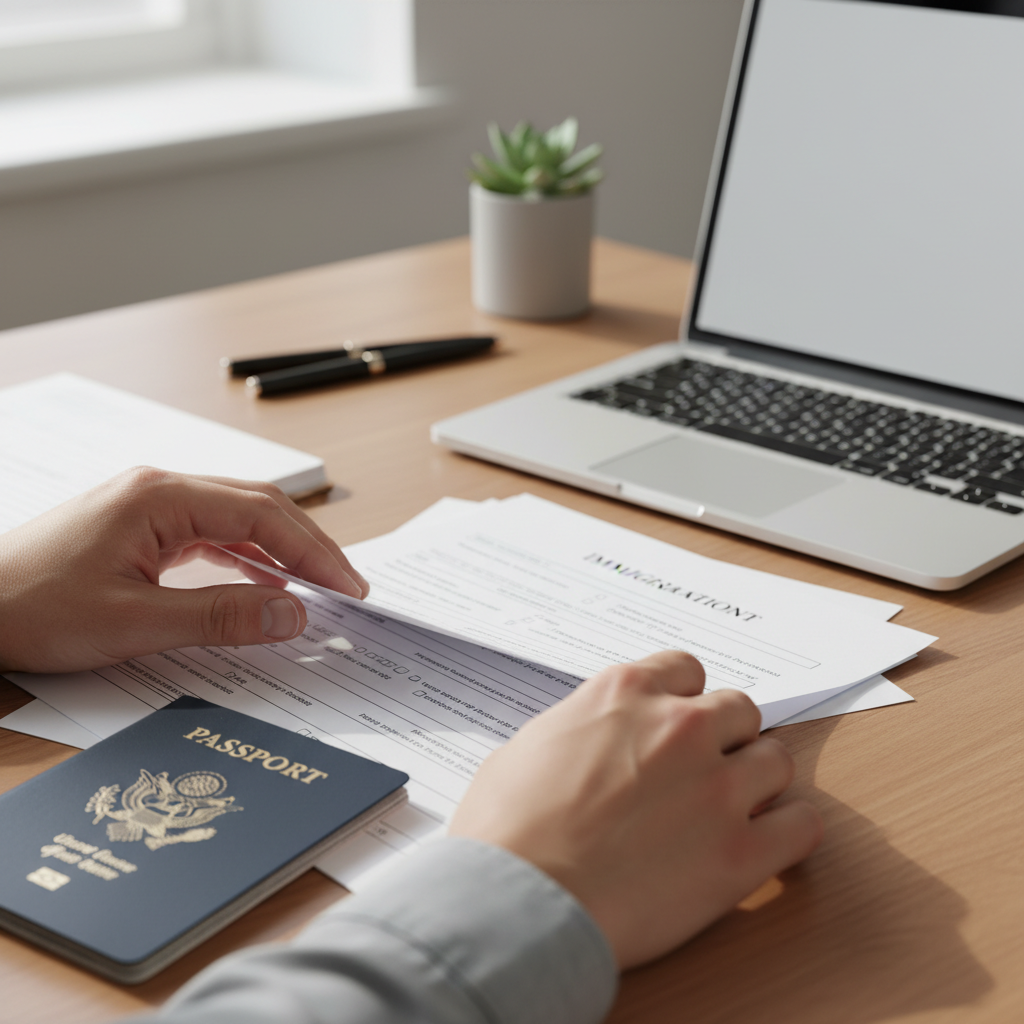
Before You Start (Prerequisites)
Set a strong foundation before you open any portal. A little prep prevents delays, refusals, and stress later.
Confirm the Right PR Pathway
- Express Entry (EE): For skilled workers using Federal Skilled Worker (FSW), Canadian Experience Class (CEC), or Federal Skilled Trades (FST).
- Provincial Nominee Program (PNP): Province-specific selection (Ontario, etc.); nomination boosts your ranking.
- Family Sponsorship: Spouses/partners, dependent children, and eligible family members.
- Other streams: Atlantic Immigration Program, Rural and Northern Immigration Pilot, Caregiver pathways, and select programs for students and graduates.
Check Eligibility Early
- Language results: IELTS General or CELPIP for English; ensure valid test dates for filing.
- Education credentials: Order an ECA (e.g., WES) if your education is outside Canada.
- Skilled work experience: Match duties to the correct NOC (TEER level) and keep proof (letters, paystubs, contracts).
- Admissibility: No serious criminality; medicals must meet health standards.
Gather Core Documents
- Identity and civil status: Passports, birth and marriage certificates, divorce judgments if applicable.
- Proof of work: Detailed reference letters (duties, hours, salary, dates) on company letterhead.
- Proof of funds (if required): Bank letters, average balances, and statements (FSW/PNP streams that require funds).
- Police certificates: From all countries where you’ve lived for 6+ months since age 18.
- Medical exam: Panel physician exam (timing depends on stream; see steps below).
- Translations/notarization: Certified translations; affidavits and true copies as needed—our team can help prepare and notarize documents.
How to Apply for Permanent Residency in Canada: Step-by-Step
Follow this sequence to stay organized and lower your risk of delays. We use a plain-English checklist approach for clarity.
Step 1: Choose Your Pathway
- Skilled workers: Start with Express Entry or a PNP stream that matches your profile.
- Spouses/partners: Consider Spousal Sponsorship (inland or outland) based on your status and travel needs.
- Students/graduates: Canadian experience may fit CEC or an Ontario PNP graduate stream.
- Caregivers or pilots: Review caregiver and regional pilot criteria for a better fit.
Step 2: Create Your IRCC Account and Check Eligibility
- GCKey or Sign-In Partner: Set up a secure IRCC account and confirm your stream’s checklist.
- Eligibility calculators: Use them for orientation, but rely on official criteria and documentation.
- Tip: Save PDFs of every instruction page you rely on—policies evolve.
Step 3: Book Language Tests
- IELTS General/CELPIP: Choose an exam center with dates that align with your filing window.
- Target scores: Higher scores often strengthen eligibility and selection in skilled streams.
- Retakes: Plan ahead if you may need a second attempt.
Step 4: Order Your ECA (if needed)
- Choose a designated organization: WES or other approved providers.
- Request transcripts early: Schools and boards can be slow—start now.
- Keep copies: Save sealed envelopes, reports, and receipts for your records.
Step 5: Build Your Express Entry Profile or Sponsorship Package
- Express Entry: Enter accurate work history, education, language results, and family info; claim points you can prove.
- Sponsorship: Complete the relationship evidence package (photos, chat logs, joint assets, travel) thoughtfully and truthfully.
- PNP alignment: Tailor your resume and profile to provincial priorities without misrepresentation.
Step 6: Pursue a Provincial Nomination (if applicable)
- Ontario Immigrant Nominee Program: Monitor streams relevant to your skills or job offer.
- Expression of Interest: Submit when eligible; respond quickly to Notices of Interest (NOIs).
- Nomination boost: A nomination can significantly improve selection chances in federal draws.
Step 7: Receive an Invitation to Apply (ITA) or Submit Sponsorship
- Express Entry ITA: You’ll have a strict window to file your electronic PR application (eAPR).
- Sponsorship filing: Compile all forms, statutory declarations, and supporting evidence; keep organization tight.
- Accuracy matters: Double-check dates, names, and document numbers against passports and certificates.
Step 8: Complete Biometrics and Medicals
- Biometrics: Attend your appointment with the correct letter and ID.
- Medical exam: Use an approved panel physician; follow all instructions exactly.
- Updates: Upload confirmations promptly to avoid delays.
Step 9: Upload Evidence and Submit eAPR (or Full Package)
- Document control: Use a consistent file-naming system and keep a master checklist.
- Translations and notarization: Include certified translations and affidavits where required.
- Review: Have an immigration lawyer review your final package to avoid small mistakes with big consequences.
Step 10: Track Application, Respond to Requests, and Prepare to Land
- Application tracker: Monitor messages and submit any further documents on time.
- Confirmation of PR (COPR): Once approved, follow the landing instructions carefully.
- Settlement prep: Plan housing, banking, SIN, and healthcare registration so your first weeks go smoothly.

PR Pathways at a Glance (Comparison Table)
| Pathway | Best For | Highlights | Watch Outs |
|---|---|---|---|
| Express Entry (FSW/CEC/FST) | Skilled workers, grads with Canadian experience | Fast selection when competitive; category-based draws | Profile accuracy; proof of funds (as applicable) |
| Provincial Nominee Program (PNP) | Candidates aligned to provincial needs | Nomination can raise selection chances | Extra steps/forms; stream openings vary |
| Family Sponsorship | Spouses/partners, dependent children | Relationship-based; inland/outland options | Evidence quality; travel plans during processing |
| Atlantic/Rural/Caregiver | Regional or occupation-specific applicants | Employer ties; community supports | Eligibility nuance; employer requirements |
Local Tips
- Tip 1: If you’re driving to our office near Highway 27 and Finch, plan around rush hours on Albion Road and the 427—arrive early with your original IDs.
- Tip 2: Winter appointments? Factor in snow delays and earlier sunsets—book language tests and biometrics with weather in mind.
- Tip 3: Need certified translations or affidavits for your PR file? Our Toronto team provides notarization and statutory declarations under one roof for faster turnaround.
IMPORTANT: These tips reflect our day-to-day support for GTA applicants preparing PR submissions with legal documentation.
Troubleshooting (Common Issues and Fixes)
Small mistakes can derail otherwise strong applications. Use these quick fixes and safeguards.
Profile or Form Errors
- Name/date mismatches: Match passports exactly; add a statutory declaration when needed. Our affidavits service can help formalize explanations.
- Incorrect NOC/TEER codes: Align duties with the correct code; revise reference letters if duties don’t match.
- Gaps in history: Avoid unexplained periods; add brief letters of explanation for clarity.
Document Problems
- Missing proof of funds: Provide bank letters and statements formatted to program standards.
- Police certificates delays: Apply early for countries with longer processing times; upload proof of application.
- Translation quality: Use certified translators; include affidavits and true copies when required.
Eligibility and Selection Challenges
- Lower competitiveness in draws: Improve language scores, secure a job offer, or target a matching PNP stream.
- Work experience proof: If old employers won’t cooperate, use alternative documents plus a sworn declaration.
- Medical or admissibility concerns: Provide complete histories; respond promptly to fairness letters with legal support.
Advanced Tips (For Competitive Profiles)
When the basics are covered, these strategies can raise your odds and reduce surprises.
- Monitor category-based selections: As of 2026, draws may favor specific occupations or language profiles—tailor your plan accordingly.
- Job offer pathways: A valid job offer with the right conditions can strengthen your case; coordinate compliance with the employer early.
- Education and language boosts: Retaking tests or completing eligible Canadian studies can meaningfully improve your competitiveness.
- Dual intent explained: Temporary status while aiming for PR is legitimate—document ties and compliance carefully.
- Bridging status planning: If eligible, consider open work authorization options while PR is processing to avoid gaps.
- Evidence quality over quantity: Curate meaningful proof instead of uploading repetitive or irrelevant documents.
- Centralized document hub: Create a master folder with subfolders for identity, education, work, funds, police, medicals, and letters of explanation.
- Legal review at key points: Have a lawyer review your file before submitting your profile and again before final submission.
Free, multilingual consultation (English, Hindi, Punjabi)
If you’re in the GTA and ready to move forward, our team at 23 Westmore Dr. Unit #218A can help you prepare, review, and submit your PR application with confidence. Explore our full range of legal services or speak with our immigration lawyer for tailored guidance.
FAQ
How long does a Canadian PR application take?
Timelines vary by stream and completeness. Skilled worker files can move faster when documentation is accurate and match program rules. Sponsorship processing depends on relationship proof and background checks. Plan for a window of several months or more, and use the application tracker to respond quickly to any requests.
Do I need a job offer for PR?
Not always. Many applicants qualify through skilled worker pathways without a job offer, though a qualifying offer can help in some streams or draws. If you do have an offer, ensure the employer and position meet program criteria before you rely on it.
Can I travel while my application is processing?
It depends on your stream and status. Outland sponsorship allows travel more easily than inland. For temporary residents, ensure you maintain valid status and re-entry documents. Always check your specific conditions before you leave.
What if my documents aren’t in English?
Provide certified translations and, where required, affidavits and notarized true copies. Our Toronto office prepares statutory declarations and notarization to keep your file complete and consistent.
Do I need a lawyer to apply for PR?
You can file on your own, but many applicants choose a lawyer to reduce risk. We help with strategy, document checklists, affidavits, relationship evidence, and responses to any fairness letters. A focused review often prevents costly delays.
Additional Resources
For detailed, personalized help in the GTA, see our immigration law service page and our services overview to understand how we support PR files end-to-end.
If you’re researching broader next steps, this overview on moving pathways offers added context beyond PR paperwork: a helpful perspective on settlement planning. And if you’re choosing counsel, here’s guidance on finding the right lawyer for your immigration case.
Key Takeaways
- Decide on the right pathway first; then line up language tests, ECA, and police certificates.
- Keep evidence accurate, consistent, and clearly labeled—quality beats quantity.
- Use affidavits, translations, and notarization to resolve gaps and discrepancies.
- Track your file closely and respond to any document requests on time.
- For GTA applicants, our multilingual team in Toronto supports you from planning to landing.
Conclusion
- Learning how to apply for permanent residency Canada is easier with a structured plan and the right support.
- Start with eligibility and documents, choose the strongest pathway, and file a clean, consistent application.
- When you’re ready, our immigration lawyer in Toronto can review your package, prepare affidavits, and guide you through biometrics, medicals, and landing.
- Next step: Schedule a conversation and bring your passport, language results, and any letters you’ve collected—we’ll help you build a complete file.