 13 March 2026
Need documents witnessed, sealed, or certified today? Here’s notary public services explained in plain English. If you’re preparing immigration forms, real estate papers, affidavits, or a power of attorney, this guide shows how notarization works in Toronto and exactly what to bring to your appointment at Vikram Sharma Law Professional Corporation (23 Westmore Dr. Unit #218A, Toronto, ON M9V 3Y7).
Quick Answer
Notary public services explained: a notary verifies identity, witnesses signatures, and applies an official seal so documents are accepted by banks, governments, and courts. At our Toronto office on Westmore Drive, we notarize affidavits, powers of attorney, real estate papers, and immigration documents—fast, precise, and compliant.
Overview
- What you’ll learn:
- What a notary public is and isn’t
- When you actually need notarization
- Step-by-step: what happens at your appointment
- Common documents we notarize in Toronto
- Best practices to avoid rejected paperwork
- How notarization fits into real estate, immigration, family, and business law
- Who this helps:
- Home buyers, sellers, and refinancing borrowers
- Families preparing affidavits or powers of attorney
- Professionals and students handling immigration, study, or employment forms
- Entrepreneurs dealing with corporate resolutions or certified true copies
- Why read this:
- You’ll save time and avoid repeat appointments
- You’ll know exactly which IDs and documents to bring
- You’ll understand how our team seals, witnesses, and certifies properly—first time
Quick Summary
- Core job: Verify identity, witness signatures, and place a notarial seal that institutions recognize.
- Bring to your visit: Valid government photo ID, unsigned documents, any required originals, and all signers.
- We handle: Affidavits, statutory declarations, powers of attorney, travel consent letters, real estate documents, immigration forms, and certified true copies.
- Turnaround: Most notarizations take minutes once identity is verified and signatures are witnessed.
- Location: 23 Westmore Dr. Unit #218A, Toronto, ON M9V 3Y7 (American English used throughout this guide).
Table of Contents
- What Is a Notary Public?
- Why Notarization Matters
- How Notarization Works (Step-by-Step)
- Documents and Use Cases
- Best Practices to Avoid Rejections
- Tools, Checklists, and Resources
- Real-Life Examples (Toronto)
- FAQ
- Key Takeaways
- Next Steps
What Is a Notary Public?
A notary public is a legally appointed official who verifies identity, witnesses signatures, and authenticates documents with an official seal. The goal is simple: prevent fraud and give third parties confidence that a signature or copy is genuine.
- Primary duties:
- Check valid, unexpired government photo ID for each signer
- Observe the signing in person (or follow approved remote rules, if applicable)
- Confirm understanding and willingness to sign (no duress)
- Apply a notarial seal and complete a notarial certificate
- Record the act in a notary journal (where required)
- What a notary is not:
- Not a document preparer (unless your engagement includes legal drafting)
- Not a guarantor of content accuracy—only of identity and execution
- Not a substitute for legal advice unless you retain our firm for that purpose
- Our role at Vikram Sharma Law:
- We provide fast, compliant witnessing and certification
- We can also pair notarization with legal drafting or advice when needed
- See our Notary Public Services for a full overview of how we help
Why Notarization Matters
Institutions need proof that a signature is real and that the signer understood what they were signing. Notarization supplies that proof.
- Prevents fraud: Verifies identity and confirms in-person execution.
- Enables acceptance: Banks, title companies, schools, and government offices often require notarization.
- Creates a reliable record: The notarial certificate and seal serve as independent evidence.
- Speeds up processing: Proper notarization reduces back-and-forth with agencies.
- Pairs with legal services: Many clients need both notarization and drafting (e.g., powers of attorney).
How Notarization Works (Step-by-Step)
Here’s the typical in-office flow at our Westmore Drive location.
- Check-in and document review
- We confirm the document type (affidavit, declaration, POA, deed, consent letter, etc.).
- We ensure the document is unsigned before the appointment.
- Identity verification
- Each signer presents valid government photo ID (passport, driver’s license, or other accepted ID).
- Names on the document should match names on ID.
- Understanding and willingness
- We confirm you’re signing knowingly and voluntarily.
- If a translator is present, we note that in the certificate when required.
- In-presence signing
- You sign in front of the notary (or follow approved remote process where permitted).
- We witness each signature and complete the notarial wording.
- Seal and certificate
- We apply an official seal or embosser and finalize the certificate details.
- We return your originals and any certified true copies to you.
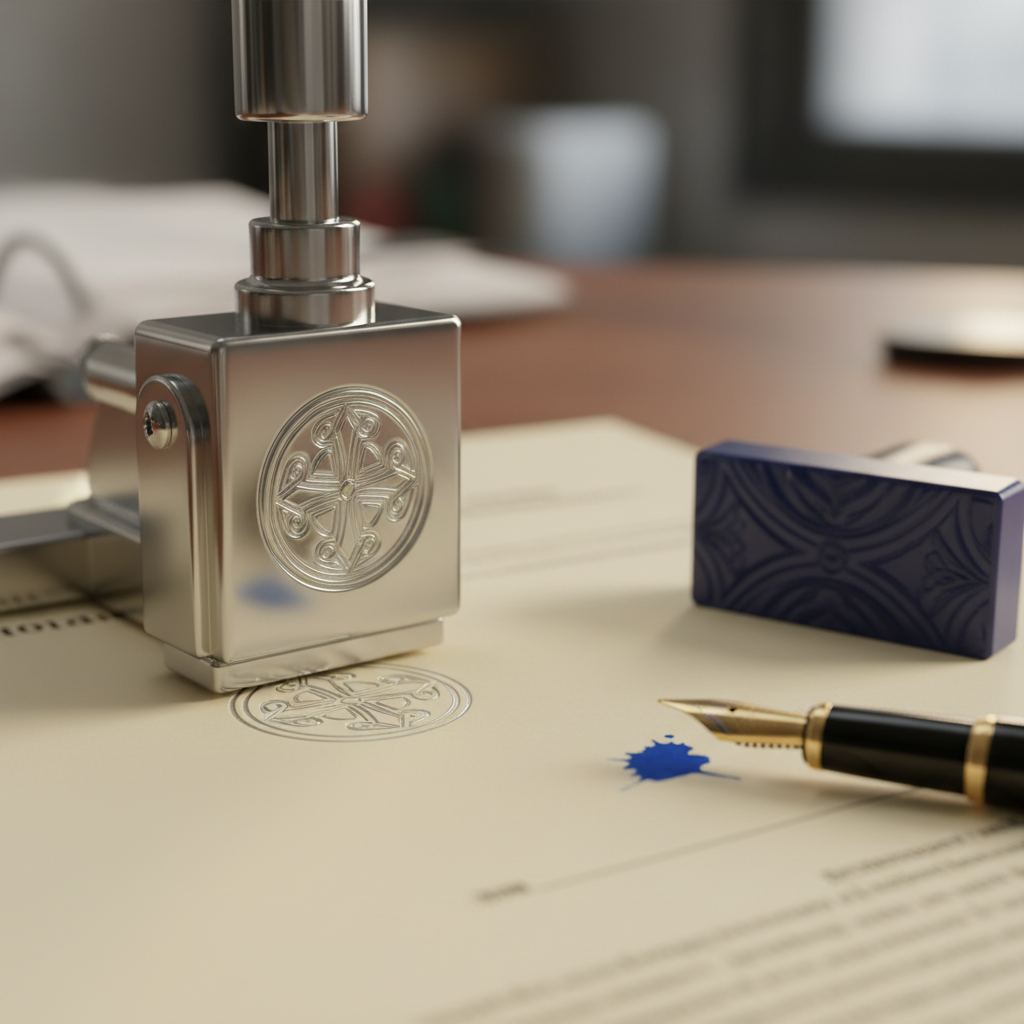
For a deeper look at our process, the close-up below shows a notary embosser creating a raised seal—one of the most recognized authenticity markers.
Documents and Use Cases We Handle
Our team supports personal, real estate, corporate, and immigration needs daily.
- Affidavits and statutory declarations
- Sworn statements for name changes, insurance, residency, travel, or school requirements
- Learn how we prepare and notarize on our Affidavits service page
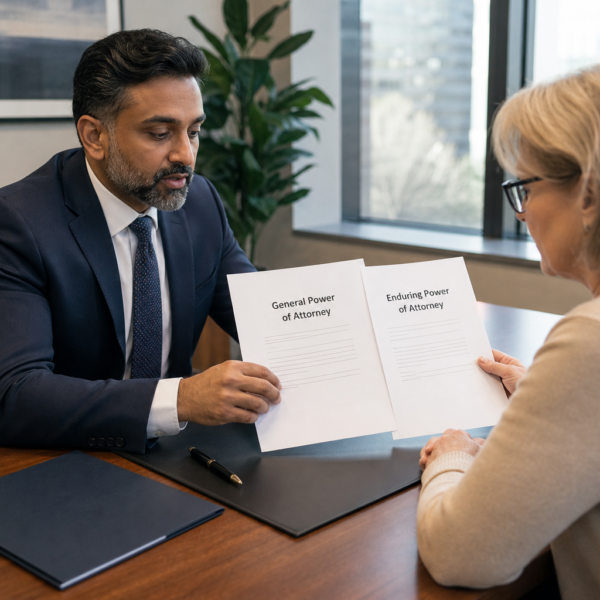
- Powers of Attorney (POA)
- General, specific, or continuing powers for property and personal care
- See related guidance on our Power of Attorney page
- Real estate documents
- Transfer forms, title documents, mortgage and refinancing paperwork
- Explore how POA and witnessing connect with our Real Estate Law services
- Immigration and travel
- Consent letters for children traveling, invitation letters, certified copies of IDs
- Citizenship, PR, sponsorship, and study/work forms that require notarization
- Business and corporate
- Corporate resolutions, shareholder documents, contract notarizations
- Certified true copies of corporate records and IDs
- Wills and estates (select tasks)
- Witnessing of supporting documents, certified copies, and related affidavits
- Note: Will drafting or execution planning is a separate legal engagement
Notary Public Services Explained: What You’ll Need
Arrive prepared to keep your appointment quick and successful.
- Bring valid photo ID
- Passport or driver’s license preferred; ensure it’s current and unexpired
- Names must match the document; bring supporting proof if they differ (e.g., name change)
- Keep documents unsigned
- Sign only in front of the notary so the witnessing is valid
- Bring originals for certification
- For certified true copies, bring the original and the copy to be certified
- All signers must attend
- If two parents must sign a child’s travel consent letter, both should be present
- Language and translation
- If you need a translator, arrange one and bring them to the appointment
- Extra copies
- If multiple agencies need originals, ask about duplicates during the visit
The image below shows the identification stage in action—an essential step before any signature is witnessed.

Appointment Process at a Glance
| Step | What Happens | Your Part |
|---|---|---|
| 1 | Check-in & document review | Provide unsigned documents |
| 2 | Identity verification | Present valid government photo ID |
| 3 | Understanding & willingness check | Confirm you understand and agree |
| 4 | In-presence signing | Sign in front of the notary |
| 5 | Seal & certificate | Collect sealed originals/certified copies |
Need a fast, compliant notarization?
Book a visit to our Westmore Drive office. We handle affidavits, declarations, POAs, real estate paperwork, immigration forms, and certified copies—often in one sitting. If you also need drafting, our legal team can help in the same appointment.
Tools, Checklists, and Resources
Use these quick lists to prepare thoroughly.
Personal Notarization Checklist
- Valid, unexpired government photo ID for each signer
- Unsigned originals (sign at the appointment)
- Original document for any certified true copy
- All signers present (parents/guardians for minors as required)
- Translator if needed
- Any special instructions from the institution receiving your document
Real Estate and Mortgage Closing Prep
- Bring lender or title company instructions
- Confirm all names match exactly between ID and documents
- If using a POA, bring the original POA and ID for the attorney-in-fact
- Ask if witnesses are required in addition to the notary
Business/Corporate Documents
- Corporate ID (articles, resolution, or minute book page if needed)
- Officer/Director ID and signing authority confirmation
- Unsigned resolutions or agreements for in-office execution
Affidavits and Declarations
- Draft text prepared and reviewed for accuracy
- Any exhibits labeled and attached (e.g., photos, receipts)
- Be ready to swear or affirm the statement’s truth
Mini Case Examples (Toronto Area)
Here are quick snapshots of common scenarios we handle.
- Real estate refinance:
- A couple needed mortgage papers witnessed on short notice.
- We verified IDs, ensured proper in-presence signing, sealed, and they submitted to their lender the same day.
- Our Real Estate Law support ensured lender acceptance.
- Child travel consent:
- Separated parents prepared a consent letter for international travel.
- We confirmed both parents’ identities and willingness, witnessed the signatures, and sealed the letter.
- Affidavit for name variation:
- A professional had inconsistent name spellings across documents.
- We drafted the affidavit, attached exhibits, and notarized for HR and licensing acceptance.
- Read more about affidavits on our Affidavits page.
- Power of Attorney for property:
- A client overseas needed a trusted family member to sign while away.
- We prepared the POA, confirmed understanding, witnessed, and notarized before the closing deadline.
- See our Power of Attorney guidance.
Local Tips
- Tip 1: Our office at 23 Westmore Dr. is near Highway 27 and Finch Ave W. Plan a few extra minutes for traffic around shift changes.
- Tip 2: If you’re flying soon from Pearson, schedule your notarization at least a day before departure to gather any extra certified copies.
- Tip 3: For child travel consent letters, try to have both parents attend together—this prevents repeat visits and airline delays.
IMPORTANT: Bring government photo ID and keep documents unsigned until you’re in front of the notary.
Notary vs. Commissioner vs. Lawyer Witness: What’s the Difference?
These roles can overlap, but they’re not identical. Use this table to decide what you need.
| Role | Core Function | Typical Use | When to Choose |
|---|---|---|---|
| Notary Public | Verify identity, witness signatures, certify copies, apply official seal | Documents for banks, governments, international use | Most official documents, powers of attorney, real estate, travel letters |
| Commissioner of Oaths | Administer oaths/affirmations for affidavits and declarations | Sworn statements used locally | When a sworn statement is needed but no notarial seal is required |
| Lawyer Witness | Witness signatures; may also offer legal advice/drafting if retained | Contracts, settlements, family or corporate agreements | When you need both a witness and legal guidance or drafting |
FAQ
- Do I need an appointment, or can I walk in?
- Appointments are recommended so we can prepare any required certificates, witnesses, or copies. Same-day slots are often available.
- Can you notarize documents for use outside Canada?
- Yes—many international institutions accept our notarial seal. If your destination requires legalization or an additional process, we’ll explain the next steps.
- What’s the difference between a notary and a commissioner of oaths?
- A commissioner administers oaths/affirmations for affidavits and declarations. A notary can do that and also certify true copies and apply an official seal widely recognized by banks and governments.
- Can you draft my affidavit or power of attorney, or only witness it?
- We can do both. If you need drafting or legal advice, we’ll scope that engagement and handle notarization in the same visit where possible.
- What IDs are acceptable?
- Government-issued photo ID such as a passport or driver’s license. The name on your ID should match your document name.
Key Takeaways
- Notarization verifies identity, witnesses signatures, and certifies copies for trusted acceptance.
- Bring valid photo ID, keep documents unsigned, and ensure all required signers attend.
- We handle affidavits, declarations, POAs, real estate, immigration, and corporate documents daily.
- Pairing notarization with legal drafting (when needed) saves time and prevents rework.
Ready When You Are
- Visit us at 23 Westmore Dr. Unit #218A, Toronto, ON M9V 3Y7.
- Bring valid government photo ID and your unsigned documents.
- If you need drafting or legal advice, let us know when booking—we can often complete everything in one session.
- Explore our Notary Public Services to see how we can help today.