
 01 February 2026
If you’re preparing to sell, gift, or inherit a vehicle—or add or remove someone from a home title—you’re likely searching for a clear, no-stress walkthrough of the title transfer process Ontario uses. From our Toronto law office at 23 Westmore Dr. Unit #218A, we help clients every week with real estate title work, notarized affidavits, and the documents ServiceOntario expects. This complete guide gives you the steps, forms, and local tips to get it right the first time.
- What you’ll learn in minutes:
- • The difference between vehicle title (ownership) and property title in Ontario
- • Step-by-step vehicle transfer instructions for private sales and family gifts
- • Exactly which documents ServiceOntario will ask for (and what causes delays)
- • When you need notarization or a real estate lawyer—and why
- • Estate, divorce, out-of-province, and lien scenarios that change the process
- • Local Toronto tips to avoid long lines and last-minute paperwork issues
Summary
- • For vehicles: Bring a completed vehicle permit (Application for Transfer), Used Vehicle Information Package (UVIP), bill of sale, valid ID, insurance, and a Safety Standards Certificate if you’ll plate the car immediately.
- • For family gifts: Qualifying relationships may allow a retail sales tax exemption when you present the correct sworn affidavit and proof of relationship.
- • For property: Real estate title transfers are lawyer-managed. We draft and register the transfer, coordinate with lenders, run title searches, and address land transfer tax requirements.
Quick Answer
The title transfer process Ontario follows depends on the asset: ServiceOntario handles vehicle ownership updates, while real estate transfers must be prepared and registered by a lawyer. From our Toronto office at 23 Westmore Dr. Unit #218A, Vikram Sharma Law assists with notarized affidavits, separation or gift documentation, and end-to-end property title registration so your transfer is accurate and timely.
Above the Fold: What’s Inside This Guide
- • What Is a Title Transfer in Ontario?
- • Why Accurate Title Transfers Matter
- • Title Transfer Process Ontario: Step-by-Step (Vehicles)
- • Family Gifts, Estates, and Special Situations
- • Vehicle vs. Property: Processes Compared
- • Best Practices and Common Pitfalls
- • Tools and Resources (with checklists)
- • Case Examples from GTA Clients
- • FAQ
- • Key Takeaways and Next Steps
What Is a Title Transfer in Ontario?
“Title” means legal ownership. The process differs depending on whether you’re transferring a vehicle or a property. Knowing which system you’re working in saves time—and headaches.
- Vehicle title (ownership): Your vehicle permit (the green document) includes an Application for Transfer on the back. Private sellers complete it to move ownership to a buyer or an eligible family member.
- Property title (real estate): Ownership changes are registered through Ontario’s land registration system (via a lawyer). The instrument (Transfer/Deed of Land) is prepared, signed, and registered after due diligence.
- Where a lawyer fits: Vehicles rarely need a lawyer, but do often need notarized affidavits for family gifts or estates. Real estate transfers require a real estate lawyer to draft, search, coordinate with lenders, and register the transfer.
Why Accurate Title Transfers Matter
- Liability and tickets: Until ownership records change, old owners can still receive fines or toll notices.
- Insurance integrity: Insurers need correct ownership to bind coverage without gaps.
- Taxes and penalties: Missing forms or incorrect affidavits can lead to tax issues or delays.
- Loans and liens: Active liens can stop a transfer cold if not cleared or documented.
- Property stakes: Errors on real estate title can jeopardize a closing, a refinance, or future sales.
Title Transfer Process Ontario: Step-by-Step (Vehicles)
Use this checklist for a smooth, same-day experience at ServiceOntario. Keep copies of everything you sign.

1) Seller Preparation (Private Sale)
- Vehicle permit: Complete the Application for Transfer section legibly. Double-check the VIN and names.
- Used Vehicle Information Package (UVIP): Provide a current UVIP to the buyer.
- Odometer reading: Record at the moment of sale.
- Bill of sale: Include VIN, year, make/model, sale date, names and addresses, signatures.
- Safety Standards Certificate (SSC): Required if the buyer will plate/register for road use now (some exceptions exist).
2) Buyer Preparation
- Identification: Valid driver’s license or Ontario photo ID.
- Insurance: Proof tied to the vehicle’s VIN (digital proof is typically accepted).
- Plates: In Ontario, plates stay with the person, not the car. Ensure the plate you plan to use belongs to the buyer and is eligible to transfer.
- Payment method: Confirm accepted methods at your chosen ServiceOntario center.
3) At ServiceOntario
- Bring: UVIP, completed vehicle permit, bill of sale, ID, insurance, and SSC (if plating right away).
- Complete: Any in-office forms as directed by the clerk.
- Outcome: You receive a new vehicle permit in the buyer’s name and update or obtain plates.
4) Family Gift Transfers (Immediate Family)
- Who qualifies: Spouses, parents, grandparents, children, grandchildren, siblings, and certain in-laws.
- Potential tax exemption: A retail sales tax exemption may apply if you provide the correct sworn family gift affidavit and proof of relationship.
- Documents you’ll likely need: Signed vehicle permit, proof of relationship, ID, insurance, and a notarized family gift affidavit.
- How we help: Our team at 23 Westmore Dr. Unit #218A can notarize your affidavit and supporting documents the same day you plan to visit ServiceOntario.
5) Special Scenarios
- Out-of-province vehicles: Expect additional checks and possibly inspections before registration.
- Liens listed on the UVIP: Clear the lien with the lender and bring a lien release letter.
- Lost or damaged permit: Replace the permit at ServiceOntario before the transfer.
- Estate transfers: Executors and beneficiaries may need the will, death certificate, and notarized affidavits. We can prepare and witness those documents.
- Separation or divorce: If a separation agreement assigns the vehicle to one spouse, bring the agreement. We can witness signatures and notarize excerpts where appropriate.
Need a notarized family gift affidavit or estate documents before you head to ServiceOntario? Book a quick appointment with Vikram Sharma Law in Toronto. We’ll prepare, witness, and notarize what you need—so your visit goes smoothly.
Family Gifts, Estates, and Special Situations
These situations are common in the Greater Toronto Area and often require extra paperwork. Handle them correctly to avoid delays.
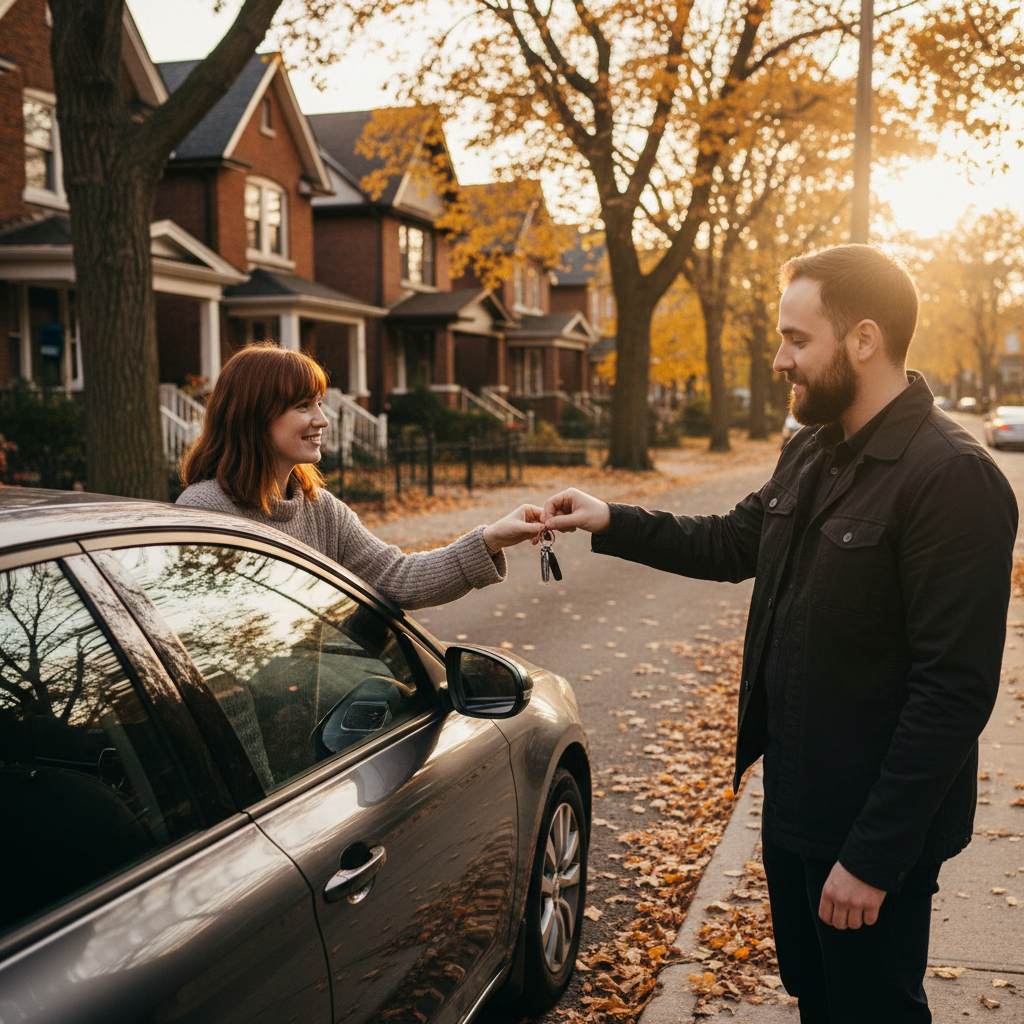
Gifting a Vehicle Within Immediate Family
- Qualifying relationship: Confirm eligibility before you prepare documents.
- Affidavit & notarization: A sworn family gift affidavit is typically required; our office can notarize the form and any supporting ID copies.
- Proof of relationship: Bring documents that demonstrate the relationship where needed.
- Insurance timing: Call your insurer before or while you’re at ServiceOntario to bind coverage.
Handling Estates
- Executor authority: Have the will, death certificate, and proof of appointment. Some scenarios require probate documents.
- Affidavits: ServiceOntario may require sworn statements; we prepare and notarize these routinely.
- Liens: Resolve any outstanding encumbrances with a lender letter before attempting the transfer.
Separation or Divorce Transfers
- Agreement proof: Bring a copy of the separation or divorce agreement assigning the vehicle.
- Notarization: We can witness and notarize relevant pages for your ServiceOntario visit.
Vehicle vs. Property Title Transfers: What’s the Difference?
Both change legal ownership, but the workflows, documents, and risks are very different.
| Topic | Vehicle (ServiceOntario Desk) | Property (Lawyer-Managed) |
|---|---|---|
| Who Handles It | Buyer/seller at ServiceOntario | Real estate lawyer using land registry systems |
| Core Documents | UVIP, bill of sale, completed permit, ID/insurance, SSC if plating | Transfer/Deed, statements, mortgage/discharge paperwork, ID verifications |
| Taxes | Retail sales tax (family gift exemption possible) | Ontario Land Transfer Tax; in Toronto, an additional municipal land transfer tax |
| Timing | Same-day if documents are complete | Coordinated over days to weeks with lenders and registries |
| Common Pitfalls | Missing UVIP, lien not cleared, no insurance | Uncleared liens, registration errors, lender consent timing |
If you’re transferring a property, our real estate law team prepares and registers the transfer, runs title searches, and coordinates lender requirements across Ontario.
Best Practices and Common Pitfalls
- Photograph documents: Snap photos of the completed permit and bill of sale before handing them over.
- Match details exactly: Names, VIN, and addresses must be consistent across all documents.
- Review the UVIP: Check for liens, branding, and the vehicle history before paying.
- Bind insurance early: Call your insurer before your number is called to avoid a pause at the counter.
- Bring notarized affidavits: Family gift and estate scenarios often require sworn statements—have them notarized in advance.
- For property: Engage your lawyer early to manage lender consents, tax statements, and identity verification.
Tools and Resources
- • UVIP instructions and buyer-seller checklists (confirm latest requirements at your local ServiceOntario).
- • Family gift affidavit templates (bring valid ID and relationship proof for notarization).
- • Property transfer guidance—searches, transfer preparation, lender coordination.
- • For a homeowner-focused walkthrough, see our property title transfer guide.
Case Examples from GTA Clients (Anonymized)
- Brampton private sale: The buyer forgot to arrange insurance; the transfer paused until their insurer issued a digital pink slip. Solution: bind coverage from your phone before your number is called.
- Mississauga family gift: A parent-to-child transfer finished the same day after we notarized the family gift affidavit and they presented relationship proof.
- Toronto estate sedan: The executor brought the will and death certificate. The UVIP showed a small lien that was cleared with a lender release letter.
- Vaughan property addition: Adding a spouse to title required lender consent, new transfer documents, and registration through land registry systems—timed with the bank to avoid penalties.
- Etobicoke condo sale: A registry error surfaced during our title search. A corrective transfer and updated parcel register avoided closing delays.
Local Tips
- Tip 1: If you’re heading to ServiceOntario near Highway 27 and Finch Ave., aim for early morning to beat traffic and lineups.
- Tip 2: Around winter holidays, lines are longer and parking is tighter—plan extra time and check posted hours.
- Tip 3: For property title work, bring mortgage details and your lender contact. Banks along Rexdale Blvd. can take time to produce payout statements; starting early keeps closings on track.
IMPORTANT: These tips reflect how we support clients from our Toronto office with notarization and real estate title services.
FAQ
- Do I need a safety certificate to transfer ownership?
If you plan to plate and drive the vehicle right away, a Safety Standards Certificate is typically required. If the vehicle will be kept off-road for repairs or parts, ask a ServiceOntario clerk about your options. - Can I keep my plates when I sell?
Yes. Ontario plates stay with the owner, not the vehicle. You may transfer your plates to your next car if eligible. - What happens if the UVIP shows a lien?
You’ll need a lender release letter or other proof the lien is cleared before ServiceOntario completes the transfer. - When is a lawyer necessary?
Vehicle transfers rarely need a lawyer, but family gift or estate scenarios often require notarized affidavits. For property title transfers, a real estate lawyer is essential to draft, search, coordinate with lenders, and register the transfer. - Can you help me with a home title transfer?
Yes. Our team prepares and registers the transfer, runs title searches, manages lender steps, and addresses land transfer tax. Start here: our real estate law services.
Key Takeaways
- • The title transfer process Ontario uses for vehicles is straightforward if your documents are complete.
- • Family gifts often require a sworn, notarized affidavit—bring ID and relationship proof.
- • Estates and separation scenarios need extra documents; plan ahead to avoid delays.
- • Property title transfers are lawyer-managed; coordinate early with your lender and lawyer.
- • Our Toronto firm can notarize affidavits, prepare agreements, and handle real estate transfers end-to-end.
Related Articles
- • Dealing with liens during a private vehicle sale
- • Adding or removing a spouse from home title
- • Executor checklist for transferring vehicles and property
- • First-time buyer land transfer tax refunds (Ontario and Toronto)
Next step: Need documents notarized or a property title transfer prepared? Book a consult with Vikram Sharma Law at 23 Westmore Dr. Unit #218A, Toronto. We offer phone and video appointments for clients across Ontario.