 18 May 2026
A commissioner of oath is an authorized official who administers oaths or affirmations and witnesses signatures on affidavits and statutory declarations. At 23 Westmore Dr Unit #218A, Etobicoke, our walk-in notary and commissioning service helps Toronto-area clients finalize sworn documents quickly, correctly, and with proper ID checks.
By Vikram Sharma — Barrister, Solicitor & Notary Public
Last updated: May 18, 2026
Quick Summary
A commissioner of oath verifies identity, administers an oath or affirmation, and witnesses your signature on affidavits and statutory declarations. Bring valid photo ID and leave documents unsigned until you arrive. At our Etobicoke office, most commissioning appointments finish in minutes, keeping real estate, immigration, and business filings on schedule.
This article is a complete, plain-language guide you can use before you visit our Etobicoke office. You’ll find definitions, steps, document types, differences from a notary or lawyer, best practices, and local tips for Toronto and the GTA.
- What a commissioner of oath does and does not do
- How to prepare so your document is accepted the first time
- When you need a notary public or a lawyer instead
- Real examples from our Etobicoke practice
- Speakable answers for quick reference and voice search
At a glance: Table of contents
- What is a Commissioner of Oaths?
- Why it matters in Etobicoke and Toronto
- How the oath and affidavit process works
- Document types, methods, and approaches
- Commissioner vs Notary vs Lawyer (comparison)
- Best practices to avoid rejection
- Tools and resources
- Case studies and examples
- Frequently asked questions
- Conclusion and next steps
What Is a Commissioner of Oaths?
A Commissioner of Oaths is an official authorized to administer oaths or affirmations and witness signatures on affidavits and statutory declarations. They certify that you swore or affirmed the content in their presence. They do not certify the truth of the content—only that the oath or affirmation was properly made.
In practical terms, the commissioner’s role is threefold: verify identity, ensure you understand you’re swearing or affirming truth, and witness your signature. A typical appointment takes a few minutes when ID and documents are ready. Many affidavits run one to three pages, while statutory declarations often fit on a standard form page.
- Primary function: administer an oath/affirmation and witness the signature.
- Scope: affidavits, statutory declarations, and certain consent letters or forms.
- Limit: a commissioner of oath does not provide legal advice unless they are a lawyer retained to advise.
If you also need document authentication beyond an oath—for example, a seal recognized internationally—you may need a notary public. Our office provides both commissioning and notary public services so you can complete the right step for your destination institution.
Why It Matters in Etobicoke and Toronto
In Etobicoke and the greater Toronto area, many real estate, immigration, and business forms require sworn statements. A nearby commissioner of oaths helps you meet filing deadlines, avoid package returns, and keep closings on track by ensuring affidavits and statutory declarations are sworn correctly the first time.
Across the GTA, sworn paperwork is woven into everyday milestones: buying a home, sponsoring a family member, updating corporate records, or proving identity changes. Miss one requirement—like signing before arriving or bringing expired ID—and your document can be rejected. A few minutes with a commissioner protects hours of downstream rework.
- Real estate closings: identity affidavits, name variance statements, or gap insurance declarations are often needed for lenders and title transfer packages.
- Immigration applications: statutory declarations may support common-law status, intent letters, or proof of relationship and residence.
- Corporate filings: directors may swear to resolutions, share issuances, or compliance statements during onboarding or banking updates.
Our Etobicoke office serves Toronto with same-day commissioning, and we can transition you into Independent Legal Advice when the form’s language is unclear or carries legal consequences. This integrated approach saves trips and reduces risk in time-sensitive matters.
Local considerations for Etobicoke
- Plan your visit if you’re coming from near the Humber Centre for Trades & Technology; mid-day tends to be busiest and parking fills quickly.
- Winter snow or heavy rain can slow travel; arriving 10–15 minutes early helps you complete same-day filings without stress.
- Institutions around Martin Grove Mall often still want wet-ink signatures; bring originals rather than scans to avoid repeat visits.
How the Oath and Affidavit Process Works
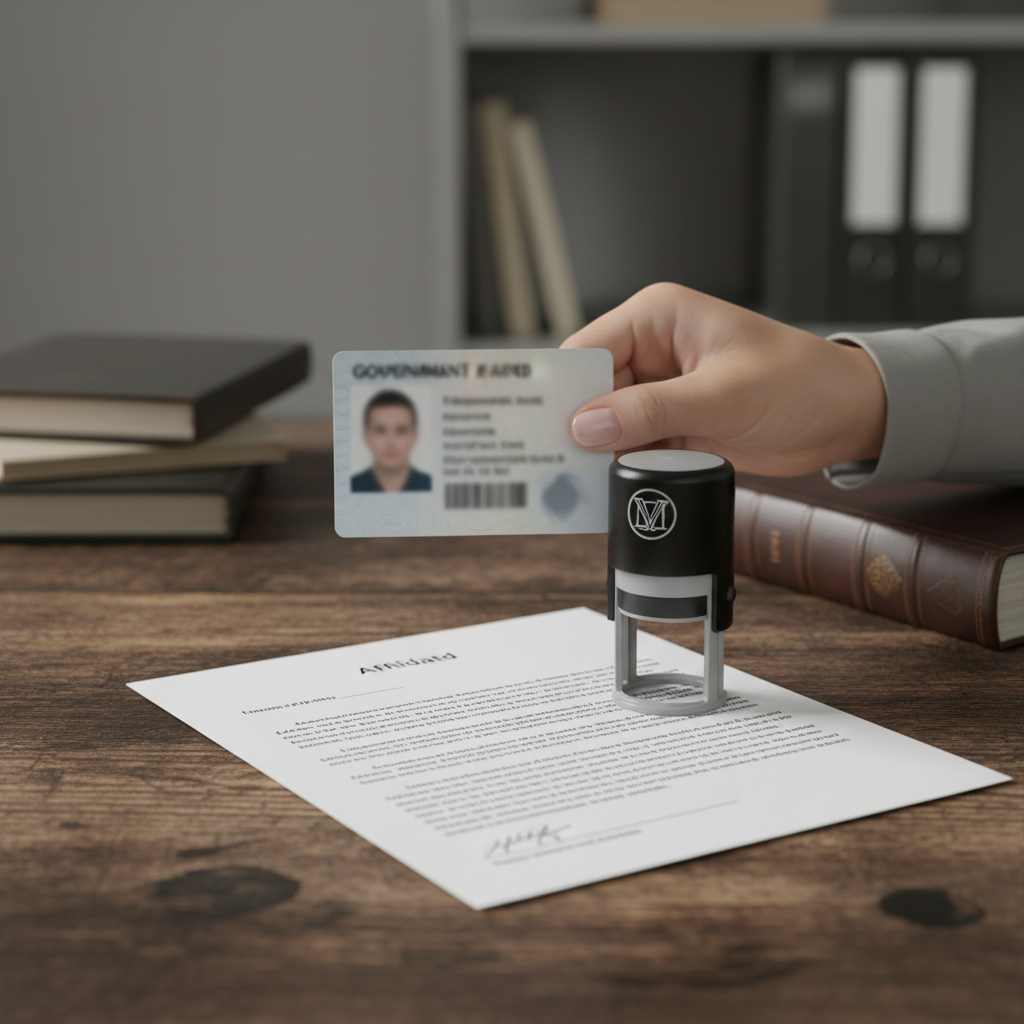
Arrive with unexpired photo ID and an unsigned document. We confirm identity, administer an oath or affirmation, you sign in our presence, and we complete the jurat with our stamp and details. Most routine affidavits finish in minutes when exhibits and IDs are ready.
Preparation is simple. Bring one government-issued photo ID (driver’s license or passport) that matches the name on your document. If the form references exhibits—like a passport copy or receipts—bring those originals so we can mark them properly.
- Prepare: review the form; do not sign yet; gather ID and exhibits.
- Identity check: we confirm your identity and that you understand the statement.
- Oath or affirmation: you swear or affirm the contents are true.
- Sign and seal: you sign; we complete the jurat and apply our stamp.
- Copies/exhibits: we initial exhibits and can prepare certified true copies when needed.
| Step | What happens | Typical time | What you bring |
|---|---|---|---|
| 1. Intake | Document check and ID review | 2–3 minutes | Unsigned form, photo ID |
| 2. Oath | Oath/affirmation administered | 1 minute | Understanding of contents |
| 3. Witness | Sign in our presence | 1 minute | Pen provided |
| 4. Jurat | Seal, date, signature | 1–2 minutes | Any exhibits |
For complex situations—like multiple deponents, name discrepancies, or language barriers—we can shift seamlessly into legal services. See our affidavit process guide for an expanded walk-through and pro tips.
Document Types, Methods, and Approaches
Commissioners of oaths handle affidavits, statutory declarations, and related forms such as travel consent letters, invitation letters, and identity confirmations. The key is that you are swearing or affirming truth before signing. When institutions require a seal or international use, notarization may be necessary.
Here are the most common documents we commission at our Etobicoke office and how they’re typically used. Each item assumes you bring valid photo ID and leave the form unsigned until the appointment.
- Affidavits: sworn statements used in real estate closings, name variance explanations, insurance matters, or court-related filings.
- Statutory declarations: formal declarations (often for government or corporate purposes) like common-law union, lost property, or proof-of-residence. See our statutory declaration steps for a step-by-step outline.
- Travel consent letters: statements of parental consent for a minor to travel with one parent or another adult—airlines and border agents often ask for them.
- Invitation letters for visas: sworn letters supporting visitor visa applications, frequently paired with exhibits like passport copies or employment letters.
- Certified true copies: confirmations that a photocopy matches the original—often requested by schools, employers, or licensing bodies.
When your use case is international or a receiving party demands a seal, we will direct you to our notary public services. If the document carries legal implications (for example, a separation agreement or loan guarantee), we can also provide Independent Legal Advice in the same visit.
Commissioner vs Notary vs Lawyer
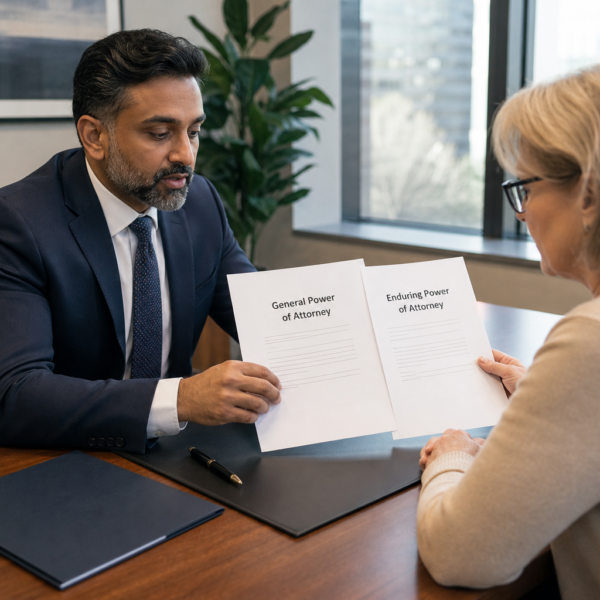
A commissioner witnesses oaths and signs the jurat. A notary public can commission and notarize for broader recognition, including international use. A lawyer can act as both, and also draft, advise, and represent you. Choose based on the destination institution’s rules and your legal needs.
People often ask which professional they actually need. The best answer depends on destination and risk. If your bank, court, or government office will accept an affidavit signed before a commissioner, commissioning is sufficient. If the recipient expects a notarial seal or the document will cross borders, notarial services are safer. If you also need legal advice on rights and obligations, a lawyer should guide you.
| Role | Core authority | Typical uses | When required |
|---|---|---|---|
| Commissioner of Oaths | Administer oaths; witness signatures on affidavits/declarations | Local affidavits, statutory declarations, consent forms | When destination accepts commissioning (no seal needed) |
| Notary Public | Commission + notarize (seal), certify true copies | International or interprovincial use; formal corporate/government requests | When seal or notarial certificate is explicitly required |
| Lawyer | Legal advice, drafting, representation; can also commission/notarize | Agreements, opinions, real estate, immigration, family, business | When legal risk or interpretation is involved |
For foundational knowledge, see this plain-language explainer on what notaries actually do. If your form mentions a “notarial certificate,” that’s a strong signal you should book our notary public services rather than commissioning alone.

Best Practices to Avoid Rejection
Leave the document unsigned, bring unexpired photo ID that matches your name, and bring originals for any exhibits. Sign only in front of the commissioner. Keep pages intact and initialed where required. These habits prevent the most common rejections and repeat visits.
In our experience, eight out of ten issues trace back to early signatures, missing ID, or mismatched names. A quick pre-check at home removes friction at the counter and increases the chances your receiving institution accepts the document on first review.
- Match names exactly: if your ID reads “Jonathan A. Singh,” avoid signing “John Singh.” Bring proof of name changes as needed.
- Mind exhibits: when a form references attachments, bring the originals; we’ll mark exhibits with initials and dates.
- One signer per line: each deponent signs under oath. If multiple people must sign, allow a few extra minutes.
- Use black or blue ink: some institutions scan documents; dark ink improves legibility.
- Ask about seals: if your form might require a seal, we can move you to notary service on the spot.
Want a deeper checklist? Our oath commissioner guide and what is a statutory declaration article expand on document-specific pitfalls people miss.
Tools and Resources
Use checklists, sample templates, and reputable guidance before you arrive. Bring government-issued photo ID, original exhibits, and leave the form unsigned. If your destination requires a notarial seal, plan for notary service rather than commissioning alone.
Here are practical resources you can use alongside this guide:
- Notary explainer: for a quick refresher on seals vs commissioning, read our primer on what notaries do.
- Affidavits service page: learn common affidavit types and preparation tips on our affidavits page.
- Affidavit walkthrough: see the step-by-step affidavit process guide for forms, exhibits, and signature order.
If you’re unsure whether your document needs commissioning, notarization, or Independent Legal Advice, we’ll clarify that at intake and route you appropriately. This saves a second trip and keeps tight deadlines intact.
Need help now? Our Etobicoke team can commission your document and, if necessary, provide Independent Legal Advice or notarial seals in the same visit. Start with our notary near me in Etobicoke page for directions and timing.
Case Studies and Examples
Commissioning is often the smallest but most time-critical step. These brief cases show how proper ID, oath wording, and exhibit handling keep real estate closings, immigration packages, and corporate onboarding on schedule in Toronto and the GTA.
Real estate identity affidavit
A first-time buyer faced a last-minute name variance between their purchase agreement and driver’s license. We prepared and commissioned a simple identity affidavit with a passport exhibit. The lender accepted it the same afternoon, and the closing stayed on track.
- Key move: exhibit properly marked with initials and date.
- Timing: 10 minutes from intake to stamped jurat.
- Backup: our notary public services were available if a seal had been requested.
Common-law declaration for sponsorship
An applicant needed a statutory declaration of common-law union with supporting tenancy records. We commissioned the declaration and initialed exhibits A–C. The package avoided a return request and proceeded to review without delay.
- Key move: exact names as shown on passports and leases.
- Timing: about five minutes once documents were organized.
- Next step: client used our declaration guide to prepare future updates.
Director’s affidavit for banking
A Toronto startup’s bank requested a director’s affidavit to support a resolution. We commissioned the affidavit, attached the resolution as Exhibit A, and the company completed onboarding the same day.
- Key move: clerk verified that commissioning (not notarization) met bank policy.
- Timing: under ten minutes, including exhibit marking.
- Follow-up: we provided an introduction to our corporate team for future agreements.
Frequently Asked Questions
Bring unexpired government-issued photo ID and leave your document unsigned until you’re in front of the commissioner. If your destination requires a notarial seal or legal advice, we can provide both services in the same visit at our Etobicoke office.
What ID do I need for commissioning?
Bring valid, government-issued photo ID such as a driver’s license or passport. The name should match your document. If you’ve had a recent name change, bring proof (for example, a marriage certificate) so we can connect the records.
Should I sign my affidavit before I arrive?
No. Sign only in front of the commissioner of oath. Signing early is one of the most common reasons institutions reject documents. We’ll guide you through the oath or affirmation and witness your signature during the appointment.
Do I need a notary public instead of a commissioner?
Some destinations require a notarial seal or specific notarial certificates. If your document mentions a seal or is for international use, a notary is appropriate. We provide both commissioning and notary services and will route you correctly at intake.
Can you help draft or review my affidavit?
Yes. Our lawyer can draft or review your affidavit as part of Independent Legal Advice. This is useful when a lender, court, or government office requires specific language or references to exhibits.
Conclusion and Next Steps
For most local filings, a commissioner of oath is the fastest way to finalize sworn documents. Bring photo ID, leave forms unsigned, and bring original exhibits. If a seal or advice is needed, we’ll provide notarial and legal services in the same visit at our Etobicoke office.
Here are the key takeaways you can act on today:
- Confirm the destination’s rule: commissioning vs notarization vs legal advice.
- Prep documents: unsigned, with originals for any exhibits.
- Bring ID: one unexpired, government-issued photo ID matching your name.
- Use our guides: start with the affidavit process guide and oath commissioner guide.
If you’re in Toronto’s west end, our team at 23 Westmore Dr Unit #218A, Etobicoke can commission, notarize, or advise—often in one coordinated visit. When you’re ready, visit our website to plan your stop.