
 24 February 2026
Applying for Canadian citizenship shouldn’t feel like a maze. Yet for many permanent residents across the Greater Toronto Area, one missing stamp, an outdated language score, or a miscounted weekend trip can hold things up. This 2026 complete guide explains citizenship application requirements Canada in plain English and shows you exactly how to build a file that moves—step by step, document by document.
Quick Answer
Most adults qualify for Canadian citizenship by meeting five pillars: 1,095 days of physical presence in the last five years, basic English or French (ages 18–54), required tax filings, a passed knowledge test, and no prohibitions. If you’re near Toronto, Vikram Sharma Law Professional Corporation (23 Westmore Dr. Unit #218A) helps PR holders verify eligibility, prepare evidence, and submit a clean application.
Above the Fold: What You’ll Learn (Hook + TOC)
- Eligibility made simple: the five pillars and how to prove each one.
- Step-by-step plan: a 10-step application process you can follow with confidence.
- Proof strategies: exactly what to collect (and how to label it) so officers can review fast.
- Local know-how: Toronto-specific tips, including timing, traffic, and flexible consults in English, Hindi, and Punjabi.
- Real examples: 13 quick case scenarios from the GTA that show how we solve common roadblocks.
- Summary
- What Is Canadian Citizenship?
- Why Eligibility Rules Matter
- The 5 Eligibility Pillars
- Eligibility Checklist (Printable)
- Step-by-Step Application (2026)
- Physical Presence Calculator: How to Use It
- Language Proof (Accepted Options)
- Tax Filings: Getting Your NOAs Fast
- Knowledge Test: 14-Day Study Plan
- Prohibitions: Timing Strategies
- Documents & Proof Strategies
- 13 Common Mistakes (and Fixes)
- Types of Applications & Special Situations
- Best Practices That Boost Approval Odds
- Tools & Resources We Use
- Case Studies from the GTA
- FAQ
- Key Takeaways
- Conclusion & Next Steps
Summary
- Core rule: meet the five pillars—presence, language, taxes, knowledge, and admissibility—then submit a consistent, well-labeled application.
- Proof wins: align addresses, travel, and taxes; include full passport scans and a clean timeline.
- Smart timing: apply with a comfortable day-count buffer and current documents.
- Local help: our Toronto team prepares affidavits, notarizations, and exhibits in English, Hindi, and Punjabi.
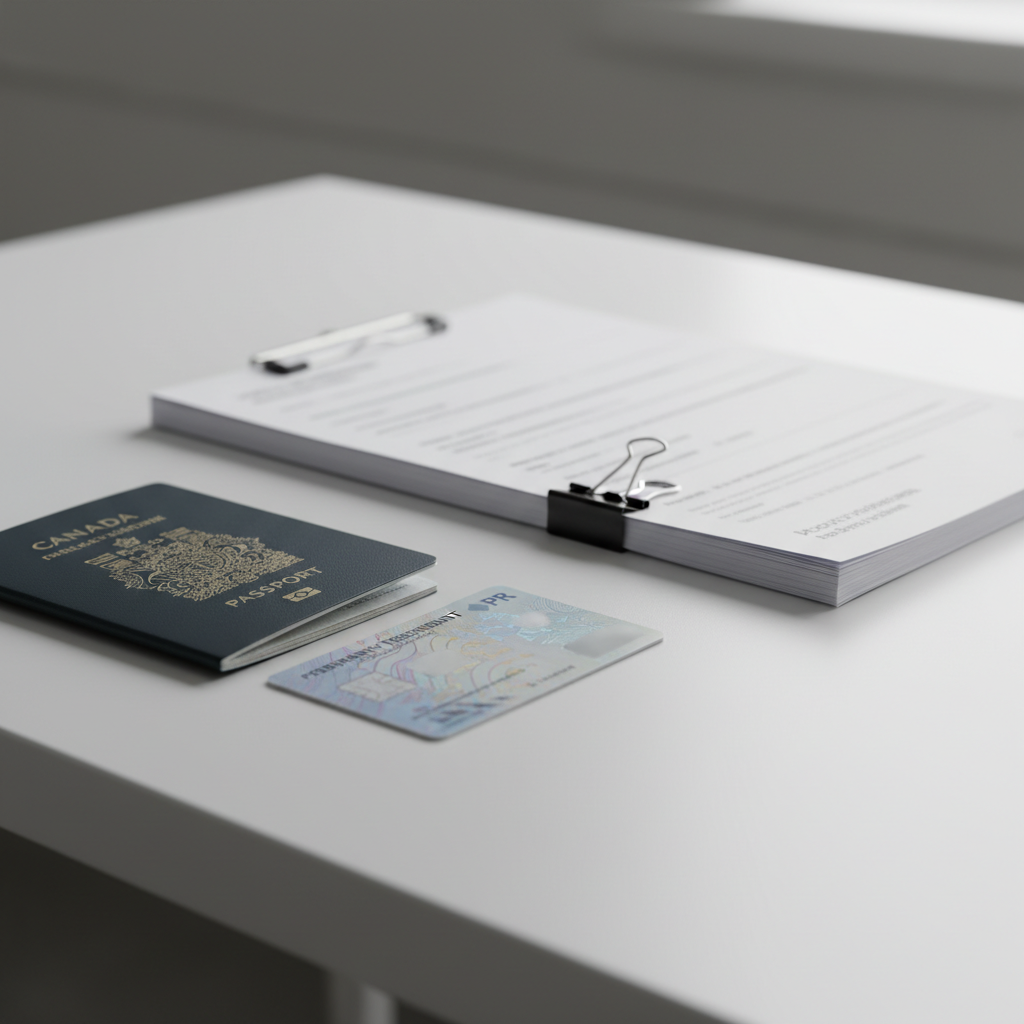
What Is Canadian Citizenship?
Permanent residence offers stability; citizenship offers full civic participation and a Canadian passport. It’s the milestone many families in Toronto, Brampton, Mississauga, and Vaughan are working toward.
- Rights: vote, run for office, access certain clearances, and obtain a Canadian passport.
- Mobility: broader travel options and consular support abroad.
- Security: unlike PR, citizenship doesn’t carry ongoing residency obligations.
- Identity: formal belonging to your Canadian community.
Why Citizenship Application Requirements Canada Matter
The rules aren’t just boxes—they demonstrate presence, integration, and readiness to participate in civic life. Meeting them thoroughly avoids residence questionnaires, interview delays, and preventable refusals.
- Predictability: clear, consistent evidence reduces back-and-forth requests.
- Faster decisions: complete applications often move quicker.
- Peace of mind: strong files help you walk into tests and interviews confident.
The 5 Eligibility Pillars (How It Works)
Think of eligibility as five pillars. If any one is shaky, shore it up before you file.
1) Physical Presence (1,095 days in 5 years)
- Baseline: at least 1,095 days in Canada as a PR within the five years before you apply.
- Pre-PR credit: limited credit for pre-PR time may apply—confirm 2026 criteria before relying on it.
- Counting method: track every entry/exit; reconcile stamps with e-tickets and itineraries.
- Practical buffer: aim above 1,095 to absorb any missed days.
- Frequent travel: rebuild trips using airline receipts, employer letters, and calendar events.
2) Language Ability (Ages 18–54)
- Requirement: basic proficiency in English or French.
- Evidence: approved language tests or accepted Canadian education proofs—verify the current accepted list for 2026.
- Name match: ensure names/dates match IDs; if not, use notarized declarations to clarify.
3) Taxes (As Required)
- Filing status: if required to file, make sure returns for the relevant years are complete.
- Proof: CRA Notices of Assessment and My Account printouts.
- Timing issues: if a recent NOA isn’t posted yet, include proof of filing and a brief explanation.
4) Knowledge Test & Interview
- Topics: Canadian history, civics, symbols, rights/responsibilities, and geography.
- Format: knowledge test (for eligible ages) plus an interview for ID, language check (as applicable), and document review.
- Accessibility: request accommodations where appropriate; follow current procedures.
5) Admissibility (Prohibitions)
- Criminality/security: certain convictions, charges, or conditions can pause eligibility.
- Immigration compliance: removal orders or misrepresentation issues affect qualification.
- Legal review: if anything raises flags, speak with counsel before filing.
Eligibility Checklist (Printable)
Use this quick list to confirm you’re application-ready.
| Requirement | Proof to Gather | Notes |
|---|---|---|
| Physical presence | Passports (all), travel history, PR card, leases/paystubs | Target 1,095+ days; add a buffer |
| Language (18–54) | Approved test or Canadian schooling proof | Confirm accepted formats in 2026 |
| Taxes | NOAs, CRA My Account printouts | Cover required years |
| Knowledge test | Study guide notes, practice results | Practice steadily |
| Admissibility | Police/court docs if requested | Address red flags early |
Step-by-Step Application (2026)
Follow this clean, 10-step plan from start to oath.
- Eligibility check: count days, verify age-based rules, and screen for prohibitions.
- Evidence gathering: passports (every page), PR card, IDs, language proof, CRA docs, photos.
- Travel log build: reconcile entries/exits using e-tickets, itineraries, and calendars.
- Create/confirm portal access: update contact info; enable notifications.
- Complete forms fully: continuous addresses, education/work, and travel—no gaps.
- Label uploads clearly: “A-1 Passport – Full.pdf,” “B-2 NOA 2024.pdf,” etc.; include a one-page index.
- Sign and copy: check every signature/date; keep a complete PDF of your submission.
- Submit: use online filing if eligible; otherwise follow paper instructions exactly.
- Respond quickly: if you receive a document request, reply early with a tidy, labeled package.
- Prepare for test/interview/oath: study steadily, keep IDs ready, and bring originals to appointments.
Physical Presence Calculator: How to Use It
- Step 1: gather all passports and travel confirmations for the five-year window.
- Step 2: enter every exit and entry—weekend trips count.
- Step 3: cross-check with airline e-receipts, calendar events, and employer letters.
- Step 4: print/save the calculator summary and include it in your evidence index.
- Pro tip: if you’re close to 1,095 days, keep building time; don’t file at the razor’s edge.
Language Proof (Accepted Options)
- Accepted test results: submit current scores from an approved English or French test.
- Canadian education: transcripts or completion letters that meet current acceptance rules.
- Names and dates: align names, birth dates, and student IDs with your application; use notarized declarations to explain discrepancies.
- Expired test? Consider accepted schooling proof or plan a retest before filing.
Tax Filings: Getting Your NOAs Fast
- CRA My Account: download Notices of Assessment and proof of filing for relevant years.
- Accountant letters: if an NOA is delayed, include a letter plus e-file confirmations.
- Consistency check: addresses and timelines on taxes should match your forms and leases.
Knowledge Test: 14-Day Study Plan
- Days 1–3: read the full guide once; highlight unfamiliar topics.
- Days 4–7: short quizzes (15–20 questions/day) and flashcards on dates and symbols.
- Days 8–10: focus on weak areas (civics, geography, key historical events).
- Days 11–13: full practice tests; keep notes on recurring misses.
- Day 14: light review and sleep early; bring valid ID and appointment letter.
Prohibitions: Timing Strategies
- Recent charges/convictions: speak with counsel about waiting periods and documentation.
- Immigration history: resolve any compliance issues (e.g., misrepresentation matters) first.
- Travel plans: minimize discretionary trips while early review is underway.
Documents & Proof Strategies
Build a record that tells one clear story—across your forms, taxes, travel, and residence.
- Identity & PR status: PR card, provincial ID, driver’s license, birth certificate if applicable.
- Passports (all, every page): show stamps/visas and the absence of undocumented travel.
- Travel history: airline e-receipts, boarding passes, hotel invoices, employer letters confirming business trips.
- Residence proof: leases, property records, utility bills, school enrollment, paystubs, bank statements.
- Language (18–54): current accepted test or Canadian schooling documents; confirm the 2026 rules.
- Taxes: CRA Notices of Assessment and account printouts for required years.
- Photos: meet current sizing/background specs; use a photographer who knows citizenship standards.
- Name changes: marriage certificates, legal name changes, and sworn declarations we can prepare and notarize.
When records conflict or are missing, we often prepare a statutory declaration and attach corroborating exhibits. That’s where our Notary Public Services, Affidavits, and Certified True Copies help keep files decision-ready. For step-by-step filing support beyond citizenship, review our permanent residency process guide.
13 Common Mistakes (and Fixes)
- Miscounted days: rebuild counts with receipts/calendars; aim for a safe buffer over 1,095.
- Expired language proof: switch to accepted Canadian education proof or retest before filing.
- Missing passport pages: re-scan everything, including blank pages.
- Vague file names: use a consistent naming convention and include an index.
- Address gaps: reconcile leases, taxes, and forms into one coherent timeline.
- Unsigned/undated forms: final page checks before submitting.
- Ignoring prior issues: disclose and explain rather than hope it won’t surface.
- Photo rejections: hand photographers the current spec sheet.
- Slow responses: calendar due dates and reply early.
- Assuming pre-PR credits: verify rules and math in 2026 before relying on them.
- Missing translations: provide certified translations for non-English/French documents.
- No backup plan: gather secondary proof (bank, HR letters) in case an officer asks.
- DIY despite red flags: criminal records, residency gaps, or identity discrepancies warrant legal review.

Types of Applications & Special Situations
- Adults (18+): standard five-pillar eligibility, test/interview, and oath.
- Minors: different evidence pathways; confirm whether applying with a parent or separately.
- Adopted persons/special cases: specialized documentation; legal guidance prevents rework.
- Urgent processing requests: limited to qualifying circumstances; include robust proof.
- Judicial review: if a refusal occurs, our Judicial Review experience helps assess grounds and timelines.
Best Practices That Boost Approval Odds
- Tell one story: align addresses, jobs, taxes, and travel across all documents.
- Front-load clarity: proactively explain complex periods with a one-page timeline exhibit.
- Keep originals: bring passports/IDs to interviews; ensure they match your uploads.
- Study smart: 20–30 minutes daily beats last-minute cramming.
- Plan travel: avoid heavy trips while your application is in early review.
- Get a legal review: one consult can save months of delay.
Local Tips
- Tip 1: Visiting our office near Highway 27 and Albion Road? Plan for Pearson-area traffic during rush hours; parking is available by 23 Westmore Dr. Unit #218A.
- Tip 2: Winter weather slows everything—book earlier January to March and pad travel time for Toronto appointments.
- Tip 3: Shift worker? Ask for video consultations; we regularly coordinate around hospital and logistics schedules across the GTA.
IMPORTANT: We offer services in English, Hindi, and Punjabi, which can make complex steps easier for many families.
Tools & Resources We Use with Clients
- Physical presence calculator: verify day counts and print a summary for your records.
- Citizenship test prep: study with the current guide and daily practice questions.
- Secure online portal: confirm eligibility for e-filing and keep contact info updated.
- CRA My Account: download NOAs and filing confirmations.
- Photo spec sheet: give photographers the latest requirements to avoid retakes.
- Affidavit templates: sworn statements, notarized when key evidence is missing.
For broader immigration context, see our PR roadmap and return here to finalize your citizenship plan with a comfortable presence buffer.
Case Studies from the GTA (13 Scenarios)
- Etobicoke frequent flyer: dozens of short U.S. trips; we rebuilt travel logs from e-receipts and confirmed 1,118 days.
- Brampton new parent: language test expired; accepted Canadian schooling proof solved it.
- Mississauga consultant: missing entry stamp; statutory declaration plus employer letters filled the gap.
- Scarborough student-then-PR: verified pre-PR credit rules before counting days.
- North York tax lag: NOA pending; we documented on-time filing and explained timing.
- Vaughan move-overlap: two leases in one month; we aligned dates with utilities to fix the timeline.
- Minor with parent: ensured the correct minor evidence stream when filing with a parent.
- Name-change trail: linked maiden and married names with certificates and a notarized declaration.
- Busy nurse test prep: 14-day microstudy plan aligned to night-shift breaks.
- YYZ work traveler: pulled corporate travel reports to capture missed weekend hops.
- RQ response: assembled bank, lease, school, and employer records to satisfy presence concerns.
- Old summary offense: advised on timing and documentation before filing.
- Split residences (Toronto–Hamilton): mapped OHIP use, utilities, and employer schedules to establish the primary residence story.
FAQ
- How do I count my 1,095 days?
Track every entry and exit in the five-year window. Use a presence calculator and keep backups—passport scans, e-tickets, itineraries, and employer letters. If you travel often, we can audit the log and reconcile differences. - What proof works for language (18–54)?
Accepted options typically include approved language tests or Canadian education documents. Confirm your proof appears on the 2026 accepted list and that names/dates match your IDs. - Do I need to file taxes first?
If required to file, yes. Include CRA Notices of Assessment and account printouts. If a recent NOA isn’t posted yet, provide proof of filing and a brief explanation. - What if my passport is missing stamps?
Provide secondary evidence (e-tickets, hotel invoices, employer confirmations). We can prepare a statutory declaration and attach corroborating exhibits. - Can older applicants skip the test?
Age affects test and language obligations. Applicants outside 18–54 may have different requirements. Review current rules or consult our team for clarity.
Key Takeaways
- Holistic eligibility: presence, language, taxes, knowledge, and admissibility all matter.
- Evidence-first mindset: consistent, well-labeled proof reduces questions and delays.
- Preparation protects timelines: build a buffer over 1,095 days and fix red flags before filing.
Conclusion & Next Steps
- Step 1: confirm your 1,095-day count (with a buffer).
- Step 2: gather and label documents; resolve tax or ID issues now.
- Step 3: choose online or paper (based on eligibility) and prepare a clean submission.
- Step 4: book a consult if you have gaps, frequent travel, or admissibility concerns.
Explore our immigration law services for hands-on help with eligibility reviews, affidavits, notarizations, and a clear filing plan from our Toronto office.