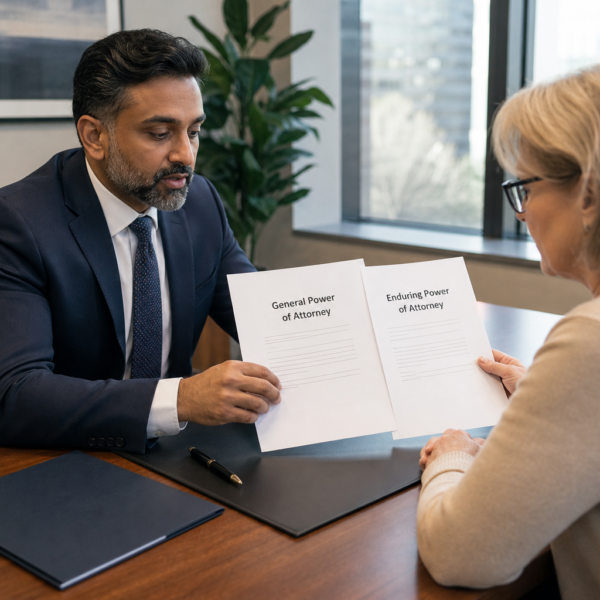
 07 May 2026
Notary services are the official verification of identity and signatures so institutions can trust what you sign. At 23 Westmore Dr Unit# 218A, 2nd Floor in Etobicoke, our law office provides notary public services alongside Independent Legal Advice and real estate, family, business, and immigration support for Toronto clients.
By Vikram Sharma Law Professional Corporation • Last updated: 2026-05-07
Above the Fold: Hook + Table of Contents
This guide shows you how to finish a notarization on the first try. You’ll learn what a notary does, which IDs work in Ontario, how an appointment runs, and how to avoid rework. Use the checklists and local tips to prevent repeat visits and missed deadlines.
- What a notary public is and isn’t
- Why notarization matters for banks, titles, and immigration
- How a standard Ontario appointment works, step by step
- Common documents and which service they need
- Best practices, red flags, and Etobicoke-specific tips
- Actionable tools, quick examples, and a concise FAQ
Summary
A notary public verifies identity, witnesses signatures, and certifies copies so governments and businesses can rely on documents. Bring valid photo ID, pre-complete forms, and sign only in front of the notary. Our Etobicoke office streamlines real estate, family, business, and immigration paperwork for Toronto clients.
- Bring original, unexpired government photo ID that matches your document name.
- Pre-fill forms but do not sign until you meet the notary.
- Know whether you need notarization or commissioning (some forms require one, the other, or both).
- Attach required exhibits and bring originals for any certified true copy requests.
- Use our local tips to navigate Etobicoke traffic and timing.
What Is a Notary Public?
A notary public is an authorized legal official who verifies identity, witnesses signatures, and certifies true copies. Their seal adds a trusted layer of authentication so banks, courts, and government offices can rely on a document’s origin, date, and signer.
Think of notarization as trust infrastructure for documents. The notary is a neutral officer who confirms identity and completes a formal record for later verification. This process deters fraud and provides the assurance many agencies require before they act on paperwork.
Notary vs. Commissioner vs. Lawyer
In Ontario, documents may refer to a notary public, a commissioner for taking affidavits, or a lawyer. They overlap but serve distinct purposes. Use the table below to identify which one your form expects.
| Role | Primary function | Typical use | Seal/signature |
|---|---|---|---|
| Notary Public | Verifies identity, witnesses signatures, certifies true copies | Certified copies, powers of attorney, international documents | Notarial seal + signature |
| Commissioner | Administers oaths/affirmations for affidavits and declarations | Affidavits, statutory declarations used in Ontario | Commissioner stamp + signature |
| Lawyer | Provides legal advice; often also a commissioner/notary | Legal strategy, review, and opinion letters | Lawyer signature; may affix notary/commissioner seal if appointed |
If your paperwork mentions a statutory declaration, our plain-English primer on what a statutory declaration is explains how declarations differ from affidavits and when each is used.
Why Notarization Matters
Notarization prevents fraud, reduces rejection risk, and speeds up decisions. Institutions rely on the notary’s seal to accept signatures as genuine, keeping real estate closings, immigration filings, and corporate deals on schedule.
Here’s the thing: many high-stakes processes pause without a valid seal. Whether you’re finalizing a mortgage discharge, certifying a passport copy for a citizenship application, or adopting corporate resolutions, the notary’s authentication is the green light for the next step.
- Real estate: Land registries and lenders often require witnessed signatures and identity checks for transfers and mortgages.
- Immigration: Certified true copies of passports, degrees, and civil status documents are common.
- Family law: Travel consent letters and sworn statements help families avoid border delays.
- Business: Corporate resolutions and officer certificates often need formal witnessing.
If you’re preparing for a property deal, see our property sale legal steps guide for the sequence lenders and title insurers watch.
How Notarization Works in Ontario
A standard appointment confirms identity, reviews completeness, and records details before the notary applies a seal and signature. Bring valid, government-issued photo ID. Pre-complete forms, but sign only in front of the notary.
Appointments are straightforward when documents are prepared properly. The notary checks ID, ensures your document is complete, confirms your understanding, and then witnesses your signature or administers an oath/affirmation as required.
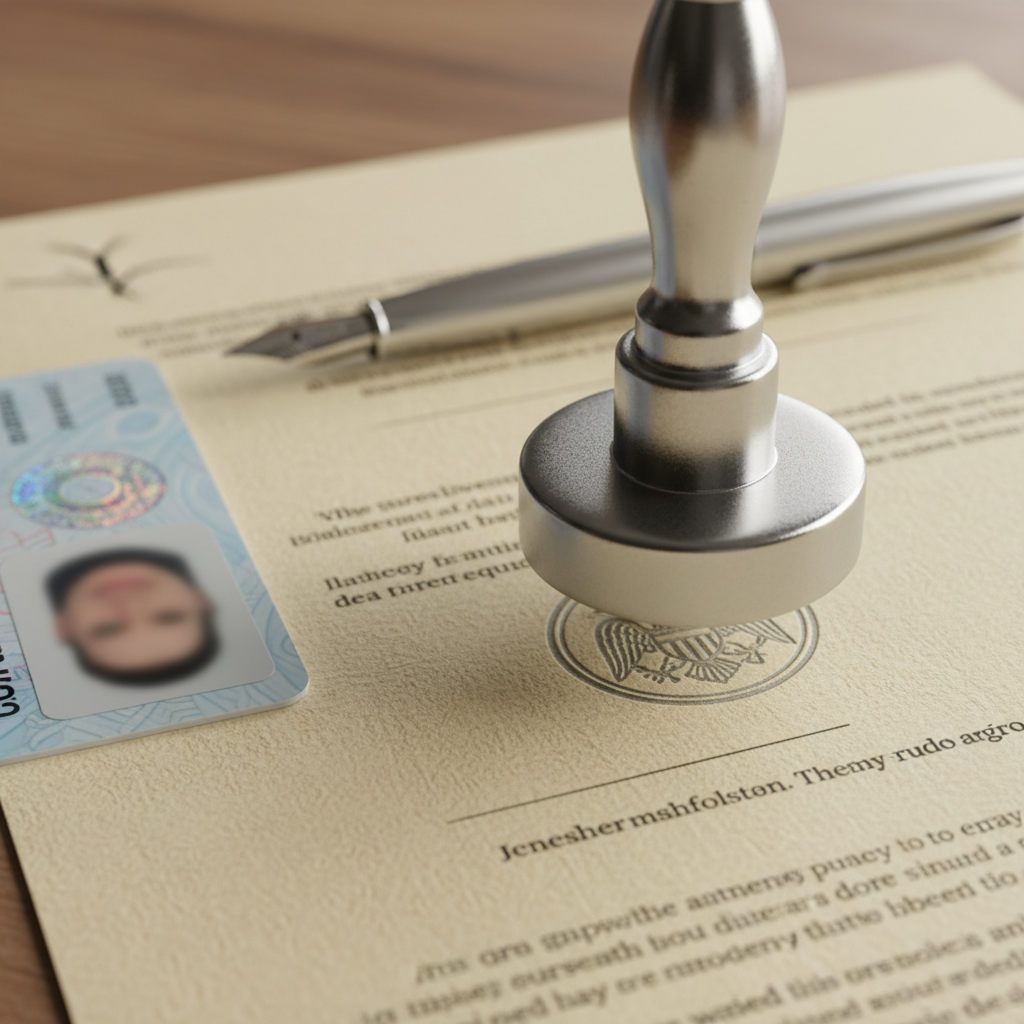
Standard appointment: 6 clear steps
- Check in: Present valid, unexpired government photo ID with the same name that appears on your document.
- Document review: The notary checks that required fields are filled and that any exhibits are attached.
- Explain the act: You’re told whether you’re making an acknowledgment, oath, or affirmation.
- Witnessing: You sign in front of the notary; for sworn statements, you verbally swear or affirm.
- Seal and record: The notary completes the certificate wording and affixes the seal.
- Final scan: You confirm names, dates, and page count match your expectations.
Quick process table
| Step | What we do | What you do | Typical time |
|---|---|---|---|
| ID verification | Match name, photo, and details | Provide original government photo ID | 2–3 minutes |
| Document check | Confirm completeness and exhibits | Bring filled but unsigned forms | 3–5 minutes |
| Execution | Witness signature / oath | Sign only in our presence | 1–2 minutes |
| Seal + certificate | Apply seal, finalize wording | Review and confirm details | 2–3 minutes |
Tip: If an agency provided exact certificate wording, bring that page. We’ll match it so you don’t have to redo anything later.
Types of Notary Services and Common Documents
Core notary services include witnessing signatures, administering oaths/affirmations, certifying true copies, and attaching notarial certificates to affidavits or declarations. Frequent documents: powers of attorney, travel consent letters, real estate forms, and corporate resolutions.
Frequent requests we handle
- Certified true copies: Passports, IDs, degrees, transcripts, and licenses for banks, employers, and immigration. See our certified true copy guide.
- Affidavits and declarations: Sworn statements used for lost documents, name changes, or insurance. Explore our affidavits service.
- Powers of attorney: Financial or personal care authority documents. Review our Power of Attorney guide.
- Real estate forms: Title transfers, refinance packages, and lender forms that require witnessed signatures and identity checks.
- Travel consent letters: For minors traveling without both parents or guardians.
- Corporate documents: Resolutions, officer certificates, and notarized minutes for cross-border matters.
Not sure which certificate you need? Our concise explainer on notarized document requirements shows how agencies phrase their instructions and what to bring so you pass checks the first time.
Best Practices and Checklists
Avoid the top causes of delay: expired ID, pre-signed documents, and missing exhibits. Bring government photo ID, pre-complete forms, sign in front of the notary, and carry originals for any certified true copy requests.
Pre-appointment checklist
- Bring an original, unexpired government-issued photo ID (passport, driver’s license, or provincial photo card).
- Ensure your document name matches your ID name (including middle names and initials).
- Pre-fill forms completely but leave signature and date blank until the appointment.
- Attach required exhibits (e.g., photos, letters) and bring the originals.
- Confirm if witnesses are required beyond the notary and whether we can supply them.
- If a third party provided exact wording, bring those pages so we can mirror them.
Signature and ink tips
- Use dark, permanent ink and sign consistently with how you usually sign official IDs.
- Avoid strikethroughs or corrections in signature areas; ask us for a clean reprint if needed.
- Write dates in a clear format (e.g., May 7, 2026) to avoid international confusion.
When you may also need legal advice
- If you are being asked to sign a waiver, guarantee, or separation agreement, you may need Independent Legal Advice (ILA). Our ILA guide explains what lenders and courts expect.
- For real estate closings, bring your lender’s instruction letter so we can coordinate witnessing with required forms.
- For corporate officers, bring authorization to sign and your resolution template if one is prescribed.
We streamline same-day notarizations and certified copies for Toronto clients. Walk in or call ahead so we can confirm ID and witness requirements before you arrive.
Explore our quick services page: Notary help in Etobicoke.
Etobicoke and Toronto Local Tips
For Etobicoke and the Toronto metro area, plan travel time and bring ID that matches your document name. Our office on Westmore Drive makes quick notarizations realistic—even during peak hours—when you arrive with pre-filled, unsigned forms and required exhibits.
We routinely pair notarization with legal services like Independent Legal Advice for lender forms or separation agreements. That way, you complete both the advice requirement and the witnessing in one visit.

Local considerations for Etobicoke
- Weekday afternoons near Martin Grove Mall can be busier; morning slots often mean shorter visits. Bring all originals to finish in one trip.
- During winter and spring storms, plan extra travel time around the neighborhood; agencies won’t relax signature or ID rules due to weather.
- If you study or work near the Humber Centre for Trades & Technology, call ahead; we can align appointment times around class or shift breaks.
Tools and Resources
Confirm your destination agency’s requirements and certificate wording before you arrive. Use agency-provided forms, bring exact IDs they list, and ask us to mirror any special certificate language to avoid rework.
- Read our overview: What notaries actually do for a practical breakdown of roles and limits.
- See our notary public services to understand which documents we process daily.
- Keep a personal checklist: document name, required ID, certificate wording, and any exhibits that must be attached.
When in doubt, bring the exact instruction page you received. We align our certificate to that language whenever possible, which is the fastest route to acceptance.
Case Examples from Our Etobicoke Office
Preparation prevents delays. From mortgage refinances needing immediate witnessing to citizenship applications requiring certified copies, a five-minute checklist often makes the difference between a same-day finish and a week-long delay.
Real estate refinance on a deadline
A Toronto homeowner arrived with unsigned lender documents and ID that matched her paperwork. We verified identity, witnessed signatures, and affixed the seal. Because she brought the lender’s exact wording, the package cleared underwriting the same day.
Citizenship application with certified copies
A student needed certified true copies of a passport and degree for an application. With originals in hand, we prepared the notarial certificates and attached copies. The agency accepted the submission on the first pass.
Travel consent letter before a flight
A parent obtained a notarized consent letter for a minor’s trip. By using our template language and bringing valid ID for both guardians, they avoided questions at the border and boarded without delays.
For matters that blur into legal advice—like guarantees or separation agreements—we combine notarization with targeted guidance so your documents are both compliant and protective. Start with our short Independent Legal Advice guide and bring any lender or court instructions with you.
Frequently Asked Questions
These quick answers cover ID rules, witnesses, certified copies, and when you also need legal advice. If your situation is unusual, bring the exact instruction page from the agency requesting your notarized document.
Can I sign before my appointment?
No. You must sign in front of the notary so we can properly witness or administer an oath. Bring the filled but unsigned document and valid, government-issued photo ID.
What IDs are acceptable for notarization?
Bring an original, unexpired government photo ID such as a passport, driver’s license, or provincial photo card. The name on your ID must match the name printed on your document.
Do I need my own witnesses?
Some documents require witnesses in addition to the notary. Call ahead with your form’s instructions. We’ll confirm whether additional witnesses are needed and if we can provide them during your appointment.
What is a certified true copy?
A certified true copy is a photocopy of an original document that a notary certifies as a true representation of the original. Bring the original so we can compare it and complete the notarial certificate properly.
When should I also get Independent Legal Advice?
If you’re signing a guarantee, waiver, or separation agreement, you may need legal advice in addition to notarization. We can coordinate ILA and witnessing in a single visit so your documents meet institutional requirements.
Conclusion and Next Steps
Arrive with valid ID, pre-complete forms, and sign in front of the notary. Bring originals for certified copies and any agency instructions. Our Etobicoke office helps Toronto clients complete notarizations, ILA, and related documents in one efficient visit.
Key takeaways
- Notarization authenticates identity and signatures so institutions can trust your documents.
- Pre-fill forms, but never sign until you’re with the notary.
- Match your ID name to the document name and bring originals for any certified copies.
- Use our checklists and local tips to avoid repeat visits and delays.
Ready to get this done? Visit us at 23 Westmore Dr Unit# 218A, 2nd Floor, Etobicoke, or start with our Notary help in Etobicoke page to plan your appointment.